Outdoor Kitchen Materials: What Burns, Melts, or Survives?

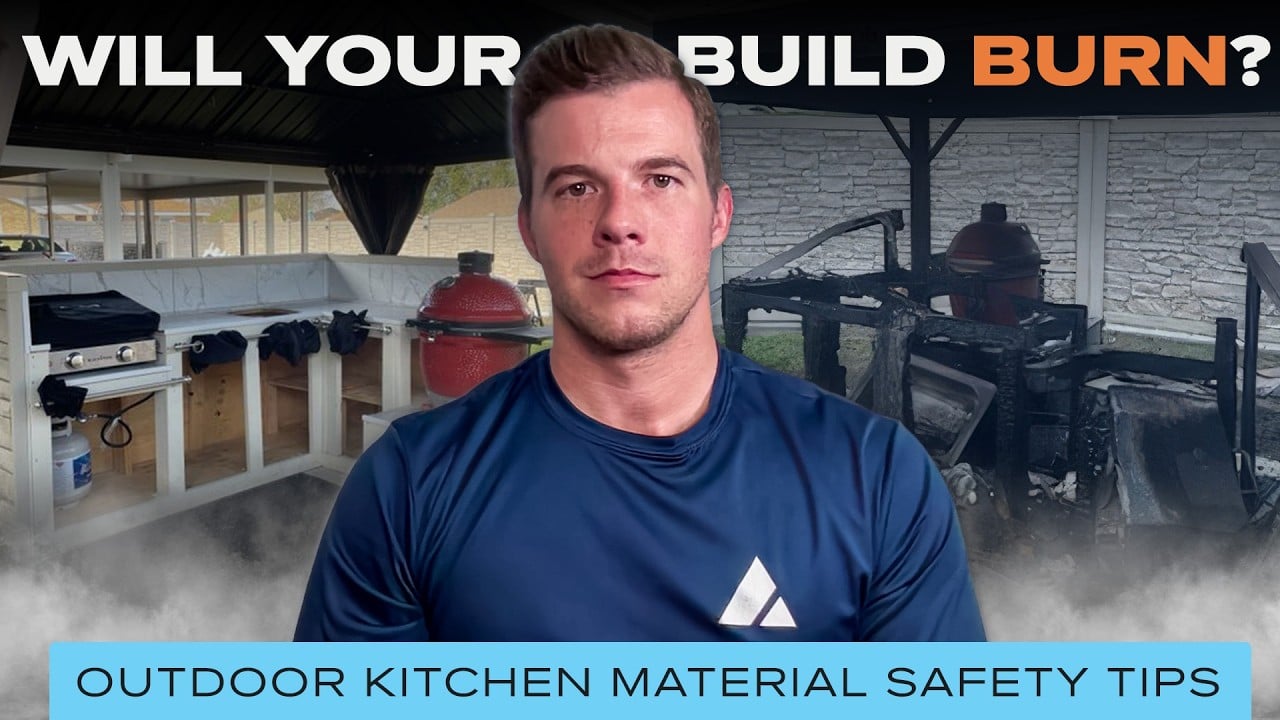
Could your outdoor kitchen materials become a safety hazard when exposed to grill heat? Some outdoor kitchen materials can burn, while others may melt, warp, or deteriorate under high temperatures. Knowing the difference could help you avoid costly mistakes when designing your backyard kitchen.

In this episode of The Outdoor Kitchen Experience, RTA Outdoor Living breaks down how different outdoor kitchen construction materials respond to heat and why choosing the right materials is essential for safety, durability, and long-term performance.

From combustible wood framing to heat-sensitive PVC, plastics, and composite materials, not every product designed for outdoor use is necessarily suitable for installation near a built-in grill.

You'll learn why outdoor kitchen safety goes beyond the island itself. Nearby decking, vinyl siding, fences, pergolas, and overhead structures can all influence how heat affects your outdoor cooking space. We'll also discuss why proper grill clearances, ventilation, and appliance placement are critical considerations before installation.

Discover how RTA Outdoor Living approaches these challenges with non-combustible structural concrete panels instead of traditional wood framing, steel-frame-and-cement-board construction, or plastic cabinet systems.

Plus, learn how RTA's design experts help homeowners think through kitchen location, surrounding materials, appliance requirements, and layout decisions before building begins.

Whether you're researching outdoor kitchen materials, comparing prefab outdoor kitchens, or planning a custom backyard cooking space, this video will help you ask the right questions before making an investment.

Did you like this video? | https://bit.ly/OutdoorKitchenExperience

Ready To Design Your Outdoor Kitchen | https://bit.ly/OutdoorKitchenDesignTool

🔔 Subscribe to The Outdoor Kitchen Experience for expert outdoor kitchen design tips, material comparisons, and practical advice to help you create a backyard built for gathering.

00:10 – Intro

00:30 – Burning vs. Melting: What's the Difference?

01:10 – Why Wood Can Be Dangerous Near Grills

01:33 – How PVC, Plastics, and Composites React to Heat

01:55 – Why Outdoor Kitchen Location Matters

02:30 – How RTA Concrete Panels Address Material Risks

03:00 – Ventilation, Clearances, and Safe Grill Placement

03:20 – How RTA Design Experts Help You Plan

03:40 – Final Tips and Next Steps

#OutdoorKitchen #OutdoorKitchenSafety #OutdoorKitchenMaterials #RTAOutdoorLiving #BackyardDesign
Design your dream
outdoor kitchen
right now

Video Transcription

0:00
Have you ever wondered why some outdoor kitchen materials burn while others melt? And are you sure the materials around your grill can handle the heat? You’re in the right place. In this video, I’ll explain the difference between melting and burning, why your kitchen location matters, and how RTA

0:15
designs outdoor kitchens with safety and material performance in mind from the beginning. Hey, I’m Cameron Coffee, designer here with RTA Outdoor Living. And today, we’re talking about a simple but very important outdoor kitchen question. What’s the difference between

0:30
materials that melt and materials that burn? The easiest way to think about it is this. Burning usually means [music] a material can ignite and become fuel for a fire. Melting means material may [music] soften, warp, deform, or break down when it gets too hot. Both are

0:45
concerns around an outdoor [music] kitchen because grills, burners, pizza ovens, and other cooking appliances produce a lot [music] of heat. So, the question is not just, does this material look good outside? The better

1:00
question is, can this material safely live near heat? [music] Wood is the clearest example of a material that can burn. It is combustible, and when wood is exposed to heat over time, it can dry out and become even more vulnerable. That’s why wood framing around a built-in grill is

1:15
something homeowners should be very careful with. Even if the outside of the kitchen [music] looks finished, what’s underneath matters. If the structure behind the finish is combustible, the risk does not disappear just because it looks nice. Then, there are materials that may melt or deform. Some [music]

1:30
plastics, PVC, or synthetic materials may not behave like wood, but heat can still affect them. That matters not only for the [music] island itself, but also nearby decking, siding, fencing, or overhead [music] structures.

1:45
They can soften, warp, sag, discolor, or fail depending on the temperature, how close they are to the heat [music] source, and how long they are exposed. So, material safety is not only about the kitchen, [music] it’s also about everything around the kitchen. This is

2:00
where kitchen location becomes a big deal. That’s why RTA takes material choice and design planning seriously. RTA’s concrete panel kitchens are built from solid concrete panels.

2:15
Not wood framing, [music] not a steel frame wrapped in cement board, and not a plastic or composite cabinet system. [music] Concrete is a non-combustible, which means it is far better suited for the heat environment around a built-in grill.

2:30
And because the panels are the structure, [music] not just a decorative surface, you’re starting with a system that was designed specifically for outdoor kitchen use. But, materials are only one part of the safety conversation. [music] You still need proper ventilation, you still need

2:45
the right appliance placement, you still need to think about the gas [music] type, grill clearances, nearby walls, overhead structure, and your local [music] code. That’s where RTA’s design experts are a major advantage. They’re not just helping you make the kitchen look good. They’re also thinking through

3:00
how the kitchen will function, where appliances should go, what surrounds the space, and what questions need to be answered before the project gets built. So, when you’re comparing [music] outdoor kitchen materials,

3:15
don’t just ask, “Will this hold up outside?” Ask, “What happens when this material is near real grill heat?” If the material can burn, melt, warp, or trap [music] heat in the wrong place, that’s something you want to know before you build. RTA helps homeowners avoid

3:30
those hidden risks by starting with better materials and a design process built around safety, durability, and long-term confidence. [music] Try our free outdoor kitchen design tool to start planning your layout with safer materials and smarter placement from the beginning. Or, book a free consultation

3:45
with one of our design experts if you want help thinking through appliances, locations, ventilation, and surrounding materials.

Related Videos

Spencer Becorest RTA Team Member
Chat With Us