




As you scroll through photos online to get inspiration for your future outdoor kitchen project… more than anything, you’re likely to get carried away with the aesthetics of the projects you’re seeing. It’s only natural, as you’re figuring out what design choices might be best for your backyard.
However, there’s more to an outdoor kitchen than just how beautiful it looks… and it can’t be assumed that every outdoor kitchen you see is constructed safely.
As an outdoor kitchen manufacturer ourselves, we’ve seen far too many examples online of beautiful outdoor kitchens that are not built safely. So in this article, you will learn why outdoor kitchen safety is overlooked, and what safety checks you need to have in place before building.
Why is Outdoor Kitchen Safety so Overlooked?
Unfortunately, outdoor kitchen safety is extremely overlooked. When you view online discourse about the topic, we’re pretty much the only ones having the conversation!
The discussion on outdoor kitchen safety isn’t being overlooked on purpose. The truth is that very few people know there are safety risks to an outdoor kitchen build, and how to avoid those risks. Most local contractors fall under this umbrella as well! And if the people building outdoor kitchens aren’t aware of the safety requirements… how will anyone know to talk about it? At this stage, the importance of outdoor kitchen safety simply isn’t known.
What Safety Checks do I Need to Have in Place Before Building an Outdoor Kitchen?
Before building an outdoor kitchen, there are a few safety precautions you need to take:
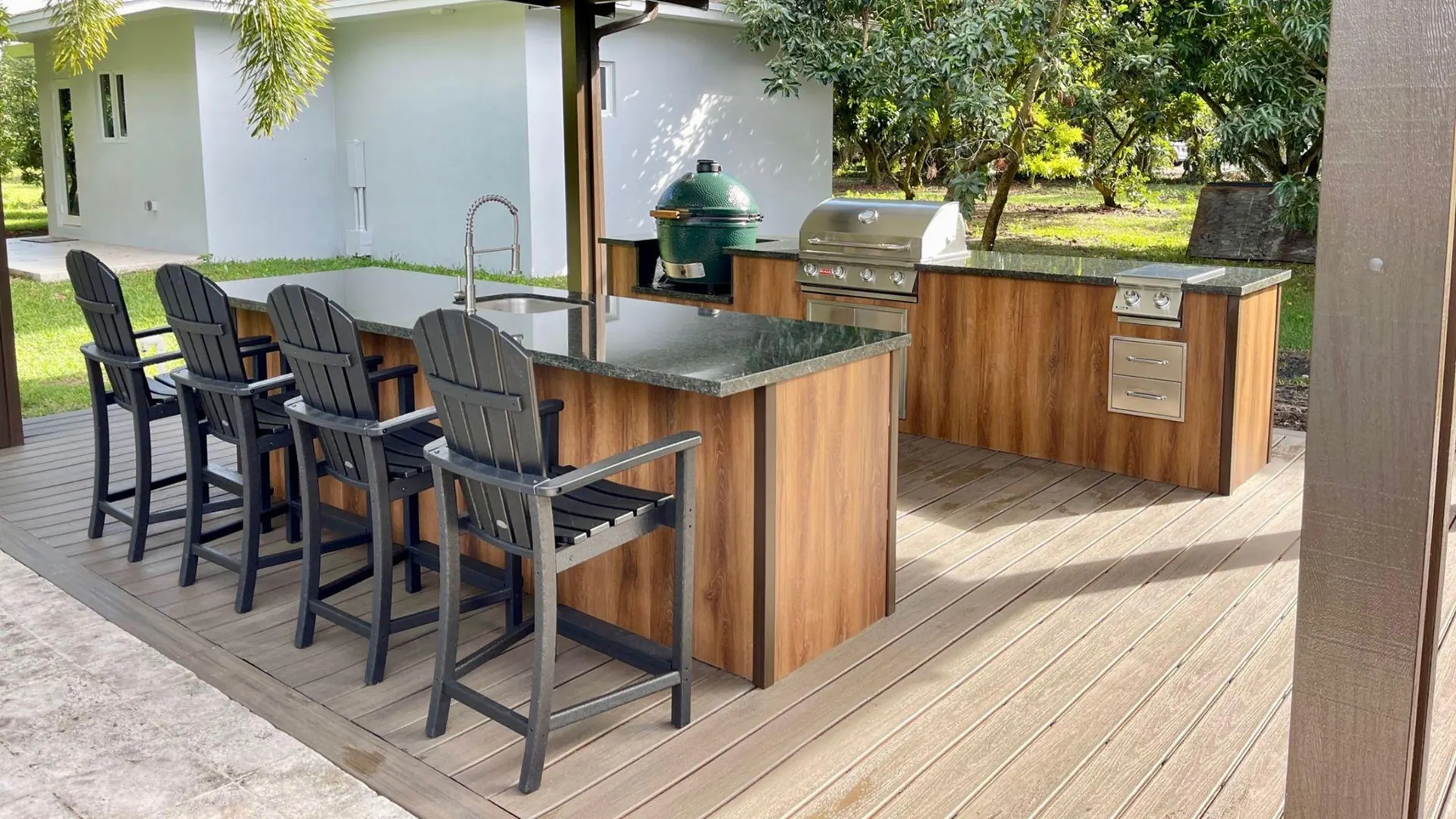
- Distance from Combustibles: You need to ensure that your outdoor kitchen is sufficiently distanced from combustible structures. For example, an outdoor kitchen near a wall or under a wooden pergola. Your appliance manufacturer will have specific guidelines about setbacks. Most brands will have setback requirements around 12” – 24” away from all combustibles.
- Island Ventilation: All outdoor kitchens require island ventilation in order for heat and gas to effectively flush out from the island. If ventilation is not present, there is a significant fire and explosion risk. Your built-in appliance manufacturer will have guidelines about minimum ventilation requirements in an outdoor kitchen.
- Overhead Ventilation (if needed): If you are installing your outdoor kitchen under an overhead structure like a gazebo, pergola, or indoor/outdoor space, overhead ventilation is often needed. This ensures that heat buildup and smoke from your grill won’t build up and potentially cause a fire.
- Utility Installation: If you’re installing water lines, gas lines, and/or electricity lines into your outdoor kitchen… it’s essential to hire a properly licensed professional to handle the task and ensure utilities are safely installed. It is not recommended to DIY this part of your outdoor kitchen project.
- Insulated Jackets (if needed): If you are building an outdoor kitchen with combustible materials like HDPE (please, never use wood!)… insulated jackets are required for all cooking appliances. This protects the combustible island structure from excessive heat and reduces the risk of a fire.
Is There an Outdoor Kitchen Safety Checklist I Can Follow?
Now that you know why outdoor kitchen safety is so overlooked and what safety checks you should implement for your project… you might be wondering if there is a complete checklist online that you could follow. This would take all the guesswork out of the process and ensure you have all your i’s dotted and your t’s crossed!
Well, embedded in our Safety Page, you will find exactly this. Our outdoor kitchen safety checklist is a free download that’ll guide you through all the safety checks you need to have in place before your project is complete. Check it out here, and enjoy!

