


If you’ve been considering working with RTA Outdoor Living for your outdoor kitchen project… there’s likely a big point of confusion you’ve encountered when learning about our different product lines.
“What is the difference between MOKs and RTA outdoor kitchens?”
You’ve seen mention of both MOKs and RTA outdoor kitchens on our website, but it’s not clear what the differences between them are. In fact, you may have felt frustrated trying to find more information about it… only to come up empty. Thankfully, as the manufacturers of both MOKs and RTA outdoor kitchens, we can demystify the topic for you.
This article will clear up any and all confusion you may have about the differences between MOKs outdoor kitchens and RTA outdoor kitchens. We’ll also discuss a few pointers to help you decide which product is better for your needs. By the end of the article, you’ll have a clear understanding of the difference between MOKs and RTA outdoor kitchens… and you’ll have a good indicator of which product line might be best for you.
What’s The Difference Between Materials Used for MOKs and RTA Outdoor Kitchens?
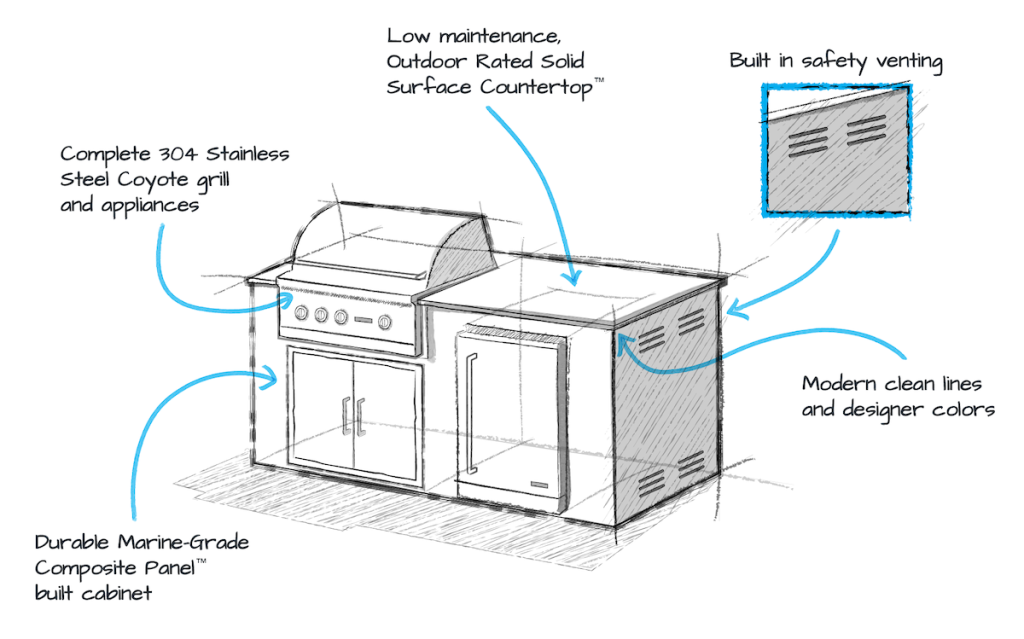
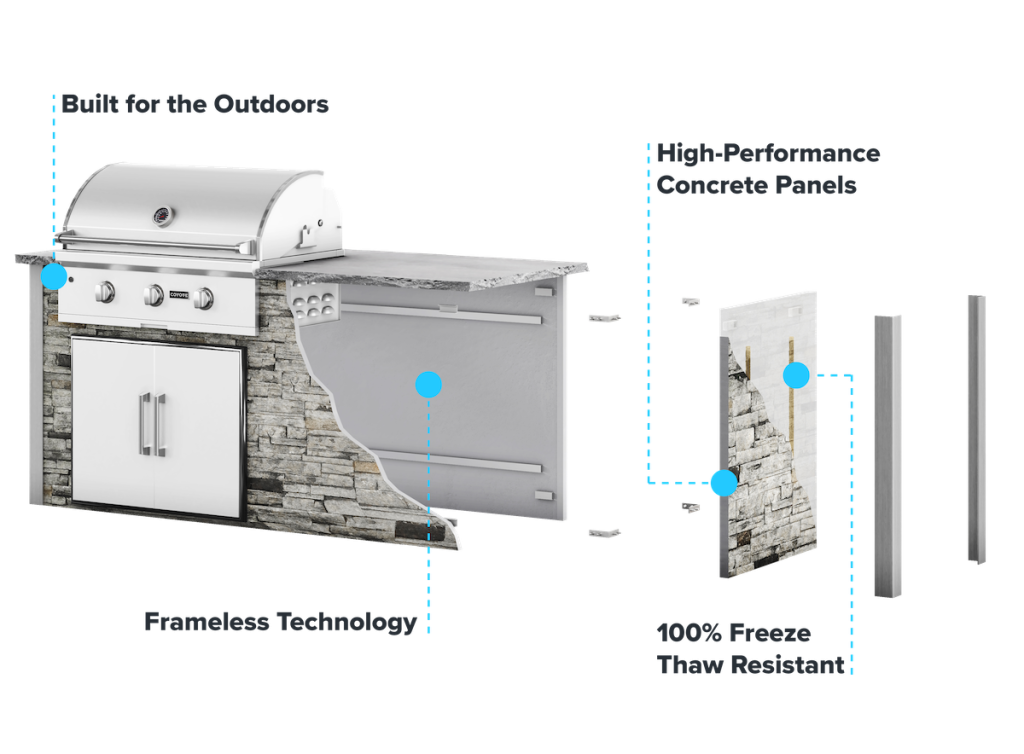
The materials for MOKs and RTA outdoor kitchens are as follows:
- MOKs Outdoor Kitchens: High density polyethylene (HDPE)
- RTA Concrete Kitchens: Ultra-high-performance concrete reinforced with microfibers
The HDPE used in MOKs is a marine grade form of plastic… whereas, RTA outdoor kitchens use a proprietary high performance concrete. In many ways, the benefits of both materials are more similar than they are different.
Both HDPE and ultra-high-performance concrete are exceptionally durable in outdoor environments… and can handle all types of weather (snow, rain, ice, high winds, salty ocean air). In terms of strength, HDPE has better flexural strength (resistance to bending) and ultra-high-performance concrete has better compressive strength (resistance to compression). Flexural strength is beneficial because countertops are better able to withstand downward pressure before cracking… and compressive strength is beneficial because it can withstand and support a great amount of weight for appliances.
A primary difference between the two materials is combustibility. The HDPE in MOKs is a combustible material, whereas RTA ultra-high-performance concrete is non-combustible. This means that in the event of a grill fire, HDPE can melt and burn. Ultra-high-performance concrete would be unaffected by a grill fire, thus preventing further spread. Due to the combustibility of HDPE, all MOKs outdoor kitchens require insulated jackets with any cooking appliances.
How Is The Assembly Method Different For MOKs and RTA Outdoor Kitchens?
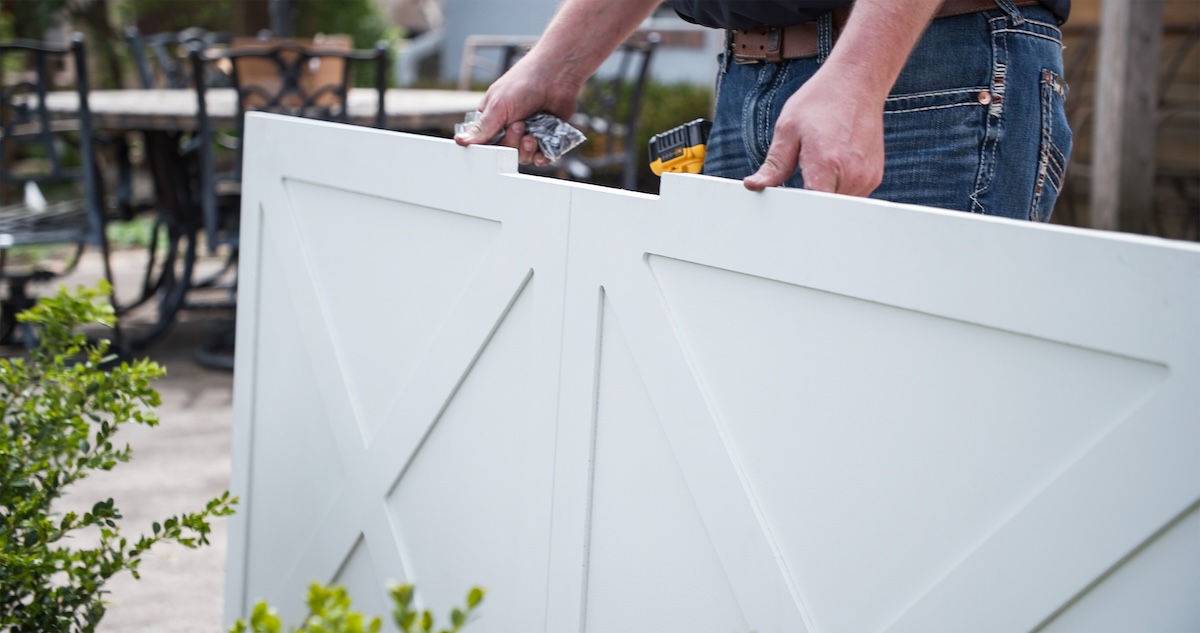
Both MOKs and RTA outdoor kitchens feature DIY-friendly assembly methods… but there is a notable difference between the two.
MOKs outdoor kitchens are assembled without the need for any power tools, screws, or bolts. MOKs HDPE panels are designed with an interlocking channel system. You slide all 4 exterior panels into place by aligning the interlocking channels, place the countertop, and set in appliances. The panels are lightweight and easy to maneuver. There is no special experience required for this project… and most homeowners can have the entire assembly done in less than an hour.
RTA concrete outdoor kitchens also use a panel system, but there are no interlocking channels. The panels must be bolted together using self tapping screws and L-brackets. This requires a power drill, and experience with DIY home improvement projects is recommended for RTA assembly. The panels can weigh in excess of 200lbs, and can be difficult to move depending on your location. Depending on how large the outdoor kitchen is, most RTA outdoor kitchens can be installed in one day.
Want to See More?
How Customizable Are MOKs Compared To RTA Outdoor Kitchens?
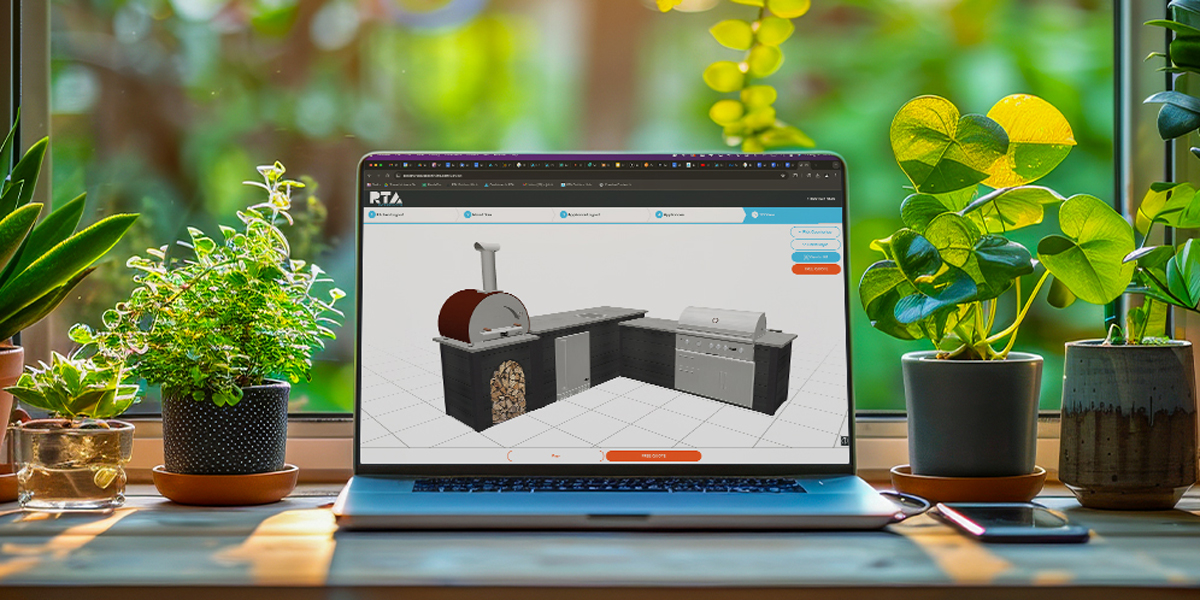
Both MOKs and RTA outdoor kitchens are customizable, but the degree to which differs between them.
MOKs outdoor kitchens can be customized, but the options are more limited. You can’t have long linear islands in excess of 13’ long… but even more importantly, MOKs limit your appliance options.
Due to the aforementioned combustibility of HDPE, not all appliances can be used with a MOKs kitchen. Built-in grills and power burners will have insulated grill jackets… but pizza ovens and kamado smokers pose a problem. Pizza ovens cannot sit on the HDPE countertop, as the excessive heat could cause it to melt or burn. The same concept goes for a kamado smoker, as it could also melt or burn the surrounding island structure.
On the other hand, RTA concrete kitchens have none of these limitations. Island lengths of 13’ or more can be produced… and there are no appliance limitations when it comes to design.
What’s The Difference In Warranty Between MOKs and RTA Outdoor Kitchens?
MOKs and RTA outdoor kitchen warranties break down as follows:
- MOKs: 10 year structural warranty
- RTA: Limited lifetime structural warranty
If you would like more information about the RTA warranty, check out our
warranty page.
All the same language applies to MOKs, except for the fact that the structural warranty is valid for a period of 10 years, instead of lifetime.
Is MOKs or RTA a Better Fit for You?
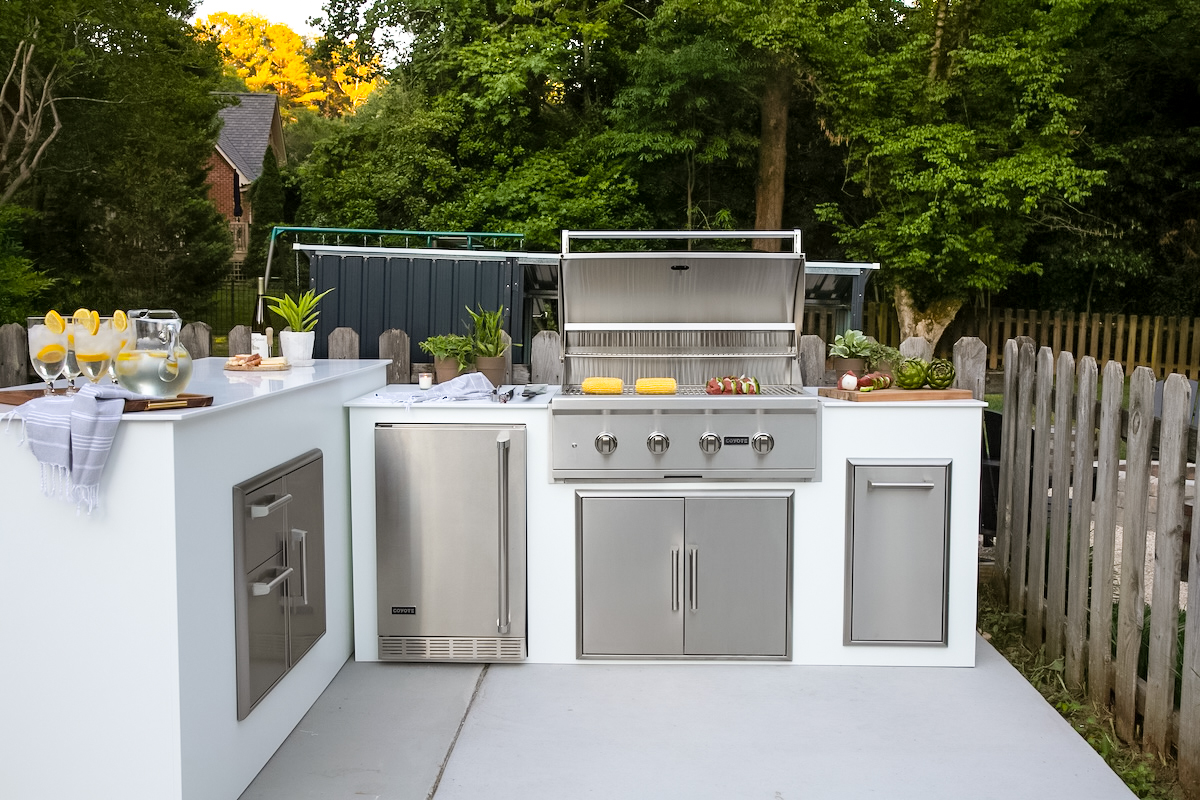
MOKs outdoor kitchens will be a better fit for you if:
- You like a purely sleek & modern aesthetic
(only one finish style is offered) - You want an outdoor kitchen that’s easier to clean
(HDPE is non-porous and less likely to stain than concrete) - You want a beginner-friendly assembly process that requires no DIY experience
- You want to bring your outdoor kitchen with you if you move in the future
(MOKs lightweight panels are easy to undo and move to a new location) - You need a lighter weight outdoor kitchen solution
(Example: your deck isn’t strong enough to support a 1,000lb concrete island)
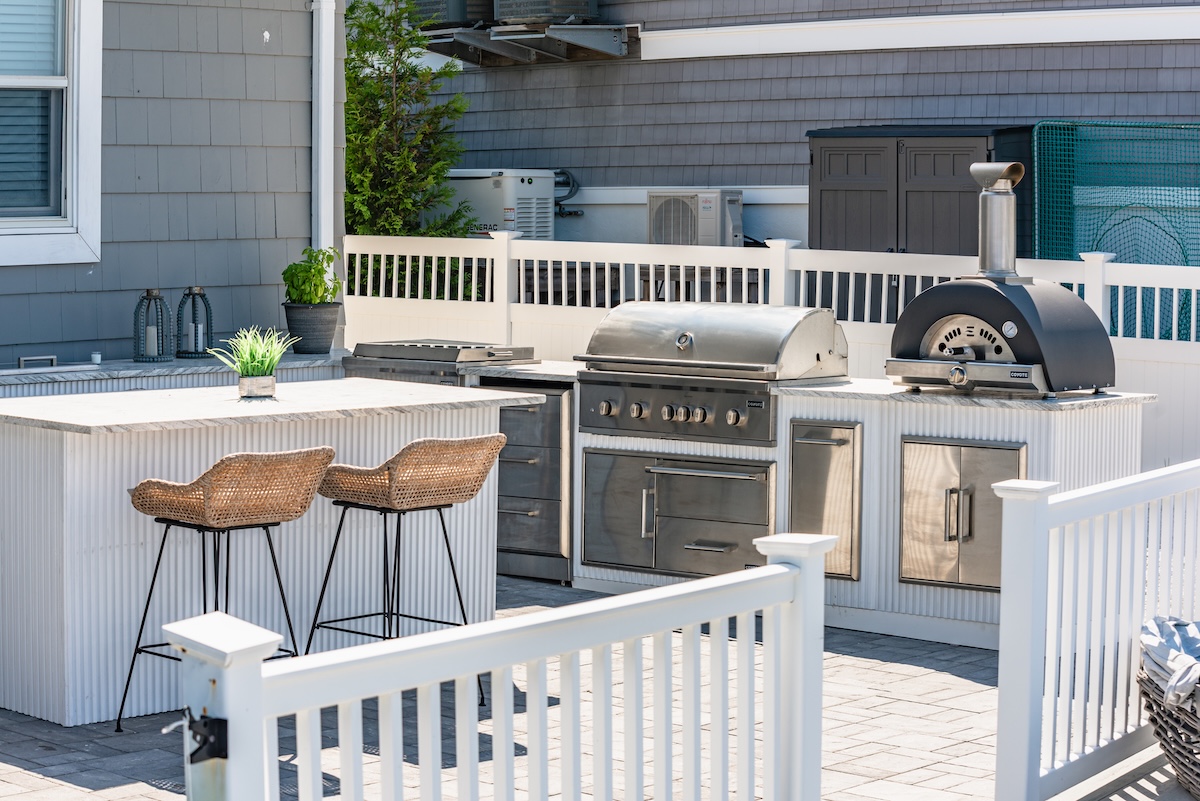
RTA outdoor kitchens will be a better fit for you if:
- You want access to a variety of different finishes and textures
(RTA can accommodate stone, wood, brick, and modern style finishes) - You don’t want to have to worry about material combustibility or insulated jackets
- You don’t mind an assembly that requires more hands-on skill and DIY experience
- You want full customization potential and access to all outdoor appliance types
- You want a permanent outdoor kitchen solution that can’t easily move
Take a Closer Look
Now that you have a solid understanding of the differences between MOKs and RTA outdoor kitchens, and you have some pointers to decide between them… now what?
Perhaps you need some more time to ponder these two options… in which case, we have two videos that are an excellent watch.
This video is an installation review of a MOKs outdoor kitchen. Not only will you get all the details about how a MOKs island is installed… the video itself will give you a great feel for the quality of the product and if you like the aesthetic.
Secondly, this video is a full day vlog of an RTA outdoor kitchen install. You’ll see what type of experience is required to install an RTA concrete island… and once again, you’ll get a feel for the quality of the product and if you like the look.
From there, if you’re feeling confident about your decision… it’ll be time to hop on a free design call with one of our Design Experts. They’ll help you move forward with certainty on your outdoor kitchen project, whether it be MOKs or RTA.
Enjoy the videos, and we look forward to hearing from you soon.