


As you begin thinking about the value of adding an outdoor kitchen to your backyard… you’ll naturally wonder how long you’ll be able to use and enjoy your new investment. How long does an outdoor kitchen last? And more importantly:
“How do I build an outdoor kitchen that lasts?”
The longer your outdoor kitchen lasts, the more value you’ll get out of your initial investment… and the more fresh-grilled burgers you’ll get to enjoy, too! Unfortunately, it’s not always clear what needs to be done in order to build a long-lasting outdoor kitchen.
As an outdoor kitchen manufacturer that puts special focus on the longevity and durability of our outdoor kitchens… over the years and through product development, we’ve tacked down on some key areas that are important for building a long-lasting outdoor kitchen. Think of them as the Blue Zones for outdoor kitchen longevity.
In this article, you will learn about the most important qualities that contribute to a long-lasting outdoor kitchen build, and learn how long a well-built outdoor kitchen should realistically last. By the end, you’ll have a good understanding of the qualities to look for to get a well-constructed outdoor kitchen that’s built for longevity.
What are the Most Important Qualities to Consider for a Long-Lasting Outdoor Kitchen?
Material Quality
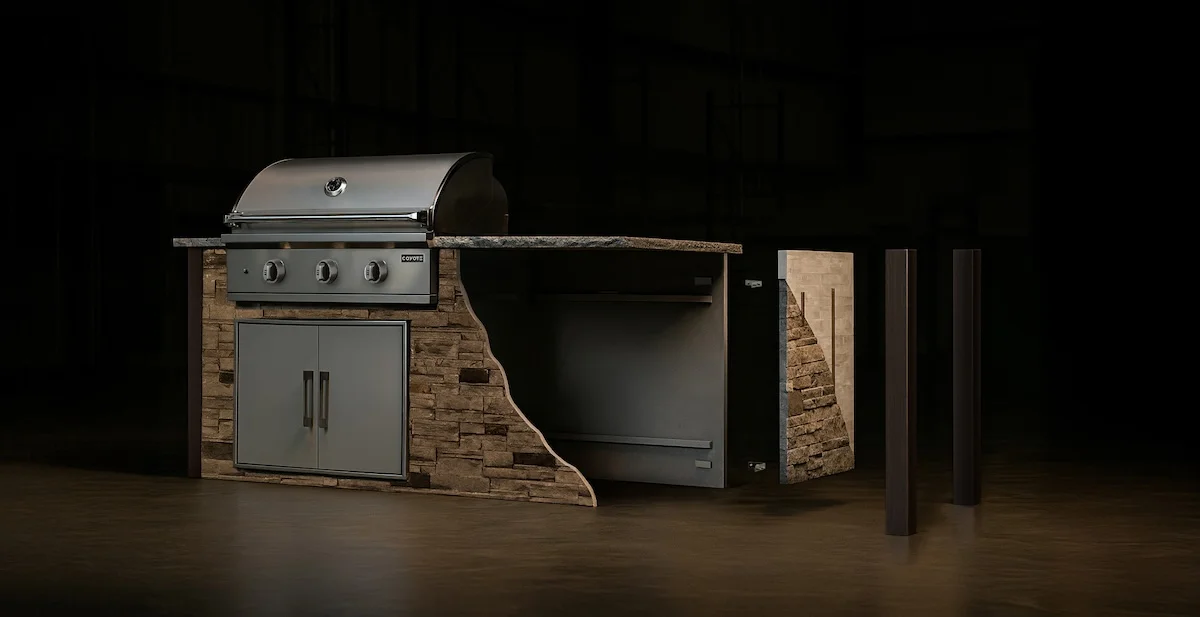
Material quality is truly the foundation of whether or not your outdoor kitchen will last a long time. If you cut corners or start off with subpar materials… it’s not realistic to expect the maximum potential lifetime out of your outdoor kitchen.
- Best Materials: The best materials for outdoor kitchen longevity will either be concrete block masonry or high-performance concrete panels. Concrete is non-reactive to all weather conditions and will not be damaged by snow, ice, rain, flooding, humidity, high winds, UV rays, and the like. In the case of RTA panels, they are made with 100-year rated concrete that will not degrade in your lifetime.
- Mid-Tier Materials: For middle-of-the-road longevity, you have a metal-framed outdoor kitchen that is sheathed with cement board and finished by hand. Hand-applied finishes can include stucco, brick veneer, stone veneer, and tile. The primary concern with metal-framed outdoor kitchens is that they don’t handle moisture or freeze/thaw cycles well. The cement board used in these outdoor kitchens is not outdoor-rated and can easily absorb water when exposed to moisture. This swelling creates external pressure on the finish, causing it to crack and get damaged. Over time, the steady influx of moisture will cause the metal frames themselves to rust and corrode, leading to structural failure. If you live in an arid climate where moisture is scarce, a metal-framed outdoor kitchen will pose less of an issue.
- Bottom-Tier Materials (Avoid): Outdoor kitchens made with wood have poor longevity and are downright unsafe to use. Due to constant exposure to moisture, wood is susceptible to swelling, warping, and rotting. And of course, being a natural material, it is also susceptible to termite and insect damage. On top of that, wood is a combustible material, making it an unsafe choice to house a grill with an open flame.

Starting to Dream Up a Design?
Your Local Climate

The climate you live in will directly impact how long your outdoor kitchen is likely to last. If you choose the wrong materials for your climate… you’re going to get a less-than-ideal lifespan. In short, the more harsh your climate is (snowy winters, coastal climates, flood-prone areas, etc.), the more important it is to invest in heavy-duty materials.
As mentioned earlier, metal framed outdoor kitchens can be a more viable option in arid climates. The lack of moisture will help prevent the primary issue with this construction method.
In most climates, choosing concrete block or high-performance concrete will be the clear winner. Most areas of the country wrestle with high humidity, harsh winters, flooding, or some other extreme weather that other materials simply cannot handle. If you want peace of mind, this is the way to go.
Appliance Quality

Considering the quality of your built-in appliances is just as critical as the quality of your island structure. Ideally, you buy appliances for your outdoor kitchen once, and enjoy them for the lifetime of your investment. There are four considerations when it comes to appliance quality to keep in mind:
- Make Sure You Buy Built-In Appliances: Not all outdoor appliances are designed to be installed in an outdoor kitchen. If you buy appliances that are not compatible with an outdoor kitchen, they’ll break down quicker and can cause safety issues due to different ventilation design. Make sure your appliances are built-in and designed for use in an outdoor kitchen.
- Stainless Steel Grade: Avoid buying appliances made with 430 stainless steel, as they are prone to rust and corrosion in a short period of time. At minimum, look for appliances that are made with 304 stainless steel, as this will give you the best bang for your buck in terms of longevity. 304 is highly rust and corrosion resistant. If you live on the coast and are exposed to salty oceanside air, you may consider further upgrading to 316 stainless steel for superior corrosion resistance, but for most homeowners, 304 is sufficient.
- Check the Warranty: Ideally, your outdoor appliances will come with a lifetime warranty. Product warranties that protect you for 1-5 years indicate a product made with materials that will quickly break down outdoors.
- Look at Burner Quality (for grills): Solid cast burners and ceramic burners are durably constructed and will give you many years of problem-free use. Avoid skinny tube burners that are constructed cheaply, and will not provide optimal performance in the long-haul.
Regular Maintenance & Preventative Measures

Just as with any other purchase… you can’t expect a long lifespan of the product without proper maintenance. If you follow these maintenance guidelines, you can ensure the best chance for optimal longevity of your outdoor kitchen:
- Wash Your Island Exterior: If your outdoor kitchen is built from high quality materials, you won’t need to do much else than just a quick hose down to clean off the exterior. If you notice any buildup that needs cleaning, that’s all it takes.
- Clean and Re-Seal Countertops (if needed): Concrete and granite countertops will need to be re-sealed every year or so, but it ultimately depends on your usage. If you cook with your outdoor kitchen every week, you’ll want to consider re-sealing your countertops twice a year. If you have 304 stainless steel countertops, sealer is not needed. Regardless of countertop material, always thoroughly wipe down the countertops after use.
- Keep Up with Grill Cleaning: Infrequent grill cleaning will lead to poor performance, appliance failures, and grease fires. Depending on how frequently you use your grill, make sure to clean it at least a few times a season. The more frequent your use, the more frequent the cleaning needs to be.
- Polish Your Stainless Steel Appliances: Although 304 stainless steel is highly rust and corrosion resistant, it does require maintenance to keep it this way. It’s recommended to use stainless steel cleaner and polish your appliances a couple times a year to keep them protected and looking clean.
- Cover Your Island: During the winter or when adverse weather hits, it’s always a wise choice to cover your outdoor kitchen with a custom island cover. It may not seem like much… but that layer of fabric provides an important layer of protection against the outdoor elements, especially snow and ice.
- Consider Adding a Shade Structure: While not necessary, a shade structure like a gazebo or pavilion will provide an added layer of protection to your outdoor kitchen. By keeping off rain, snow, ice, and intense sun, you’re keeping weather-related stressors completely off your outdoor kitchen.
- Winterize Your Outdoor Kitchen: If you live in a cold climate, make sure you winterize any outdoor appliances that need to be taken care of during the off-season. Water pipes need to be drained to prevent frozen pipes, and any electrical appliances will need to be shut off.
Craftsmanship of the Builder

Currently, there are no set building standards to ensure an outdoor kitchen is properly constructed. As such, the onus is completely on the homeowner to make sure their builder/provider can be trusted to build a high-quality outdoor kitchen.
Unfortunately, due to the lack of building standards, many contractors build subpar or even dangerous outdoor kitchens. It’s not intentional; they simply aren’t aware of what the best practices are, because there are no standards set to follow.
Most contractors don’t know about the best materials to use, climate considerations, the importance of proper ventilation, and the nuances of outdoor kitchen construction. If you work with a general contractor who works primarily on other projects, the quality of craftsmanship will be lacking because they don’t have specialized knowledge and experience, which will directly impact the longevity of your outdoor kitchen.
How Long Should a Well-Built Outdoor Kitchen Last?

The longevity you can expect from your outdoor kitchen depends largely on how it is constructed. For a comparison:
- Concrete Block / High-Performance Concrete Panels: These outdoor kitchens will easily last 10 years. With proper maintenance, 20+ years is highly realistic.
- Metal Framed Outdoor Kitchens: 5-15 years depending on your climate conditions.
- Prefab Outdoor Kitchens or Wood: You can expect a maximum of 3-5 years.
By now, you should have a clear understanding of the factors you need to consider for building a long-lasting outdoor kitchen… and how long a well-built outdoor kitchen should actually last.
And now that you’re armed with this information, you may want to start thinking about the outdoor kitchen design you want and figure out who can build it for you. To get started, a great place to play around is with our free online design tool. This comprehensive and easy-to-use tool allows you to customize all aspects of your outdoor kitchen layout. And in just a few minutes… you’ll get to see the completed design rendered on your screen.
Give it a try, and we’ll see you in the next article!