If you’re planning to build an outdoor kitchen anytime soon… it’s a good idea to know what mistakes to avoid before getting your project underway.
Hence, your question: “How do outdoor kitchens fail?”
It’s an excellent question that you’ve likely had a difficult time finding an answer for. There’s not much discussion on what goes wrong with outdoor kitchens online… and that lack of transparency can be frustrating.
As an outdoor kitchen manufacturer with years of experience in the industry, we have a deep understanding of what causes some outdoor kitchen projects to fail… and others to succeed. In this article, you’ll learn how outdoor kitchens fail, the most common reasons for failure, and see 2 real-life examples of outdoor kitchen failures and what went wrong.
How do Outdoor Kitchens Fail?
Low grade building materials, poor quality topical paint or sealers, lack of proper maintenance, and poor layout choices can all cause an outdoor kitchen project to fail.
Low Grade Building Materials
It’s obvious but it has to be said: using poor quality materials in an outdoor kitchen will lead to failure. Below are a few outdoor kitchen materials we recommend steering away from at all costs, and the reasons why they fail:
- Low Grade Stainless Steel: Poor quality stainless steel, such as 430 grade, is not designed to endure the outdoor environment. This material rusts and corrodes quickly, which will cause structural integrity issues if used in your outdoor kitchen island or appliances. To avoid this problem, use 304 grade or 316 grade stainless steel.
- Wood: We always warn against using wood in an outdoor kitchen because it is a combustible material. You’re housing an open flame grill inside of a wood structure, which is a huge fire hazard! Aside from this, wood is prone to rotting, warping, and swelling, all of which will cause your outdoor kitchen structure to fail at some point.
- Cement Board: Cement board is frequently used in metal framed outdoor kitchens. Metal frames serve as the structure, cement board is the sheathing material, and the cement board is covered with a finish material of your choice. The issue with cement board is that it readily absorbs moisture, especially with ground contact. This absorption of moisture will cause the cement board to expand, creating outward pressure on the frame and finish. This leads to the finish cracking or pieces of the finish popping off, corrosion or rusting of the metal frames due to moisture exposure, and degradation of the cement board itself.
Poor Quality Topical Paint / Sealers
Many outdoor kitchens will be finished off with topical paint or sealer. As you might imagine, if a poor quality paint or sealer is used… it won’t last very long, especially in a harsh outdoor environment.
Lack of Maintenance
Although outdoor kitchens aren’t particularly high maintenance… they do need to be maintained on a regular basis! If you skimp out on properly maintaining your outdoor kitchen, eventually you will have failures in multiple areas.
Make sure you:
- Regularly clean stainless steel appliances to prevent surface rust
- Regularly clean your grill and cooking appliances to reduce the risk of grease fires
- Reseal your countertop surfaces (concrete, granite) once a year to keep them in good condition
- Winterize your outdoor kitchen during the winter months if you live in a cold climate to protect your appliances
Poor Layout Choices
Sometimes, outdoor kitchens don’t literally fail from a structural standpoint. Sometimes, outdoor kitchen projects are a failure because the final design isn’t actually functional for your needs or your space.
For example, many homeowners don’t consider the importance of adequate counter space and storage appliances. If you have a bunch of cooking appliances with no countertop workspace… you’re left with a pretty non-functional outdoor kitchen.
We’ve also seen situations where a galley island (two grill islands facing each other) were placed too closely together. The doors and drawers were almost close enough to hit the opposing island, and there wasn’t enough walkthrough space to be comfortable.
Want to Avoid Planning Mistakes?
4 Common Reasons for Outdoor Kitchen Failure
Common reasons for outdoor kitchen failure include unsafe cooking conditions, exposure to moisture, weather-related damage, and an improperly constructed patio or deck.
Unsafe Cooking Conditions
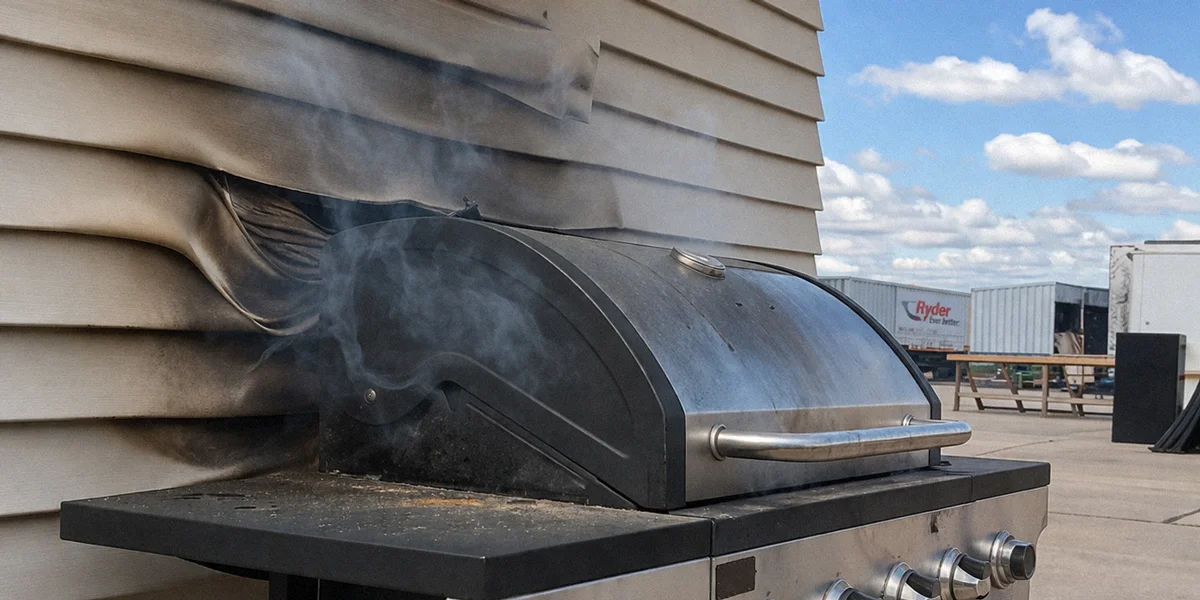
Many outdoor kitchen projects can fail because they were placed too closely to a structure with combustible materials. Most commonly, this looks like an outdoor kitchen that was placed right against house siding. The residual heat coming off your grill can cause vinyl siding to melt, or a full-blown fire depending on the situation.
Fires can also break out if your outdoor kitchen is too close to a wooden overhead structure, or is not properly ventilated. If a grease fire breaks out, this can spread to your gazebo or pergola, leading to widespread damage.
Exposure to Moisture
The enemy of most outdoor kitchens is moisture. If you live in a humid and/or rainy climate, many outdoor kitchen materials can fail with consistent moisture exposure. As mentioned earlier, wood and cement board are most susceptible to moisture damage. To avoid this, consider using outdoor kitchen materials that won’t get damaged from water exposure, such as concrete.
Weather-Related Damage
All forms of weather can pose trouble for an outdoor kitchen. Excessive rains and flooding can cause moisture damage… snow, ice, and freezing temperatures can cause the layers of an outdoor kitchen to break apart… coastal environments can corrode your appliances and metal frames… and intense UV rays can damage paints and finishes. Using weather-resistant materials such as concrete is your best way to combat this.
Improperly Constructed Patio or Deck
Sometimes, the base your outdoor kitchen sits on was not properly constructed. If your outdoor kitchen is placed on a poorly constructed deck or patio, you may deal with settling or sinking over time. This can damage both your outdoor kitchen and deck/patio, so be sure your base is built well before proceeding!
2 Real-Life Examples & What Went Wrong
Below are 2 real-life examples of outdoor kitchen failures and what went wrong.
Wooden Outdoor Kitchen Fire
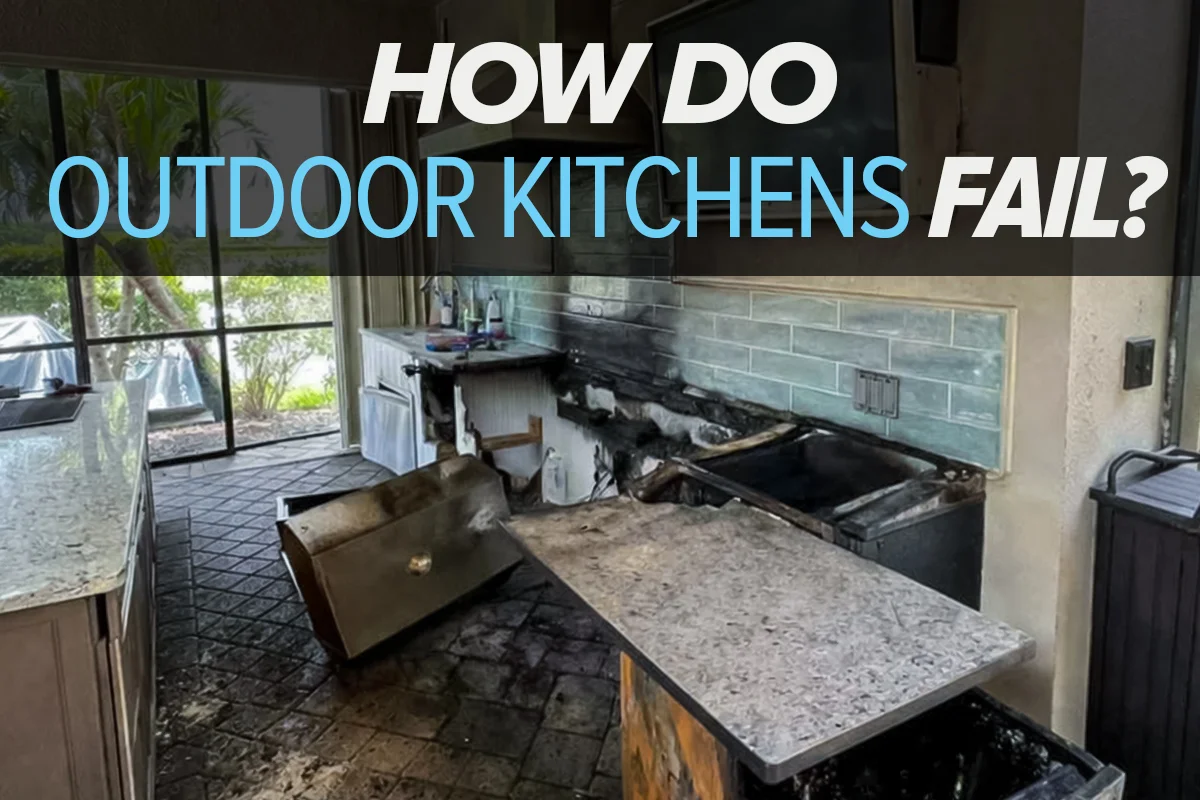
In this example, you’ll see the remains of what once was a wooden outdoor kitchen. Unfortunately, a grill fire broke out… causing the outdoor kitchen to burn down and significant damage to the overhead gazebo.
Outdoor Kitchen Too Close to a Wall
In this scenario, an outdoor kitchen was placed too close to a home. There was a little bit of a backsplash behind the grill intended to provide some protection, but it wasn’t enough. The excess heat coming off the grill caused the siding directly above the grill to melt.
How Can I Avoid an Outdoor Kitchen Fail?
At this point, you should have a strong understanding of what causes outdoor kitchens to fail, and the most common reasons for failure. But you might still be unsure of how you can avoid these problems.
When it comes to design failures, this article about avoiding the top 5 planning mistakes will help you make sure your outdoor kitchen design is a success. Enjoy the read, and we’ll see you in the next blog!