




When you pursue the project of building an outdoor kitchen… at least at first, it’s rather unlikely that you’ll be thinking about the potential safety risks to avoid. Outdoor kitchens aren’t generally thought of as a potentially risky home improvement project.
So with that in mind, we want to bring this important question to mind: “What are the safety risks of building an outdoor kitchen?”
As an outdoor kitchen manufacturer that has deeply invested time and money into engineering an outdoor kitchen system that avoids major safety risks… we have learned a lot about the qualities of an outdoor kitchen that may make it safe or unsafe to use. In this article, you’ll learn about the potential safety risks associated with island ventilation and appliance ventilation, safe or unsafe materials, safe distances from combustible structures, and how to know whether or not you have a safe outdoor kitchen build.
Quick Links:
What are the Safety Risks Associated with Island Ventilation?
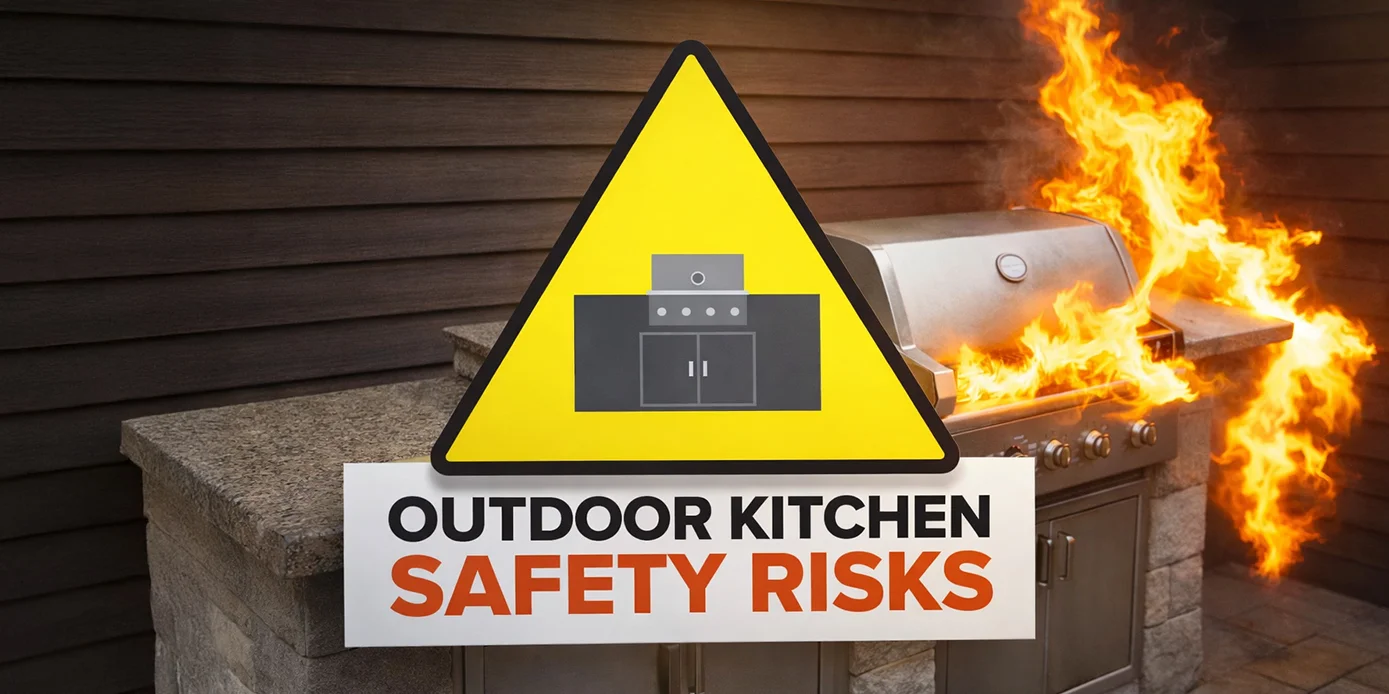
The primary safety risks associated with lack of island ventilation are heat and gas buildup which can lead to fires or explosions. It may sound farfetched, but 18,000 Paradise Grills outdoor kitchens were recalled in 2023 for this very reason. To avoid this problem, it’s essential that your outdoor kitchen island structure is properly ventilated in order to allow heat and gas to effectively flush out of the island.
Below are the most important points to keep in mind about proper island ventilation:
- In addition to island fires and explosions, an outdoor kitchen that is not ventilated can also cause issues with electrical components overheating and moisture trapping
- Make sure your island ventilation is appropriate for the fuel type you are using. Natural gas is less dense than air, which will cause it to rise to the top of your outdoor kitchen. Liquid propane is more dense than air, which will cause it to sink to the bottom of your outdoor kitchen. If you’re using natural gas, you’ll need top ventilation, and if you’re using liquid propane… you’ll need bottom ventilation.
- Most outdoor appliance brands will have ventilation requirements when used in an outdoor kitchen, so double-check manufacturer recommendations before starting your build
- Generally speaking, you’ll need a minimum of 20-40 square inches of ventilation per island enclosure. You will need multiple vents to create cross-ventilation, as this will create the airflow required to move air out of the island.

Want an Outdoor Kitchen Solution that’s Already Thought Through All the Safety Questions?
What are the Safety Risks Associated with Appliance Ventilation?

The primary safety risks associated with improper appliance ventilation are heat or gas buildup which can lead to a grill fire or explosion. The best way to avoid this risk is to use properly designed, true built-in appliances for your outdoor kitchen. Many homeowners wonder if they can install freestanding appliances into an outdoor kitchen, but this is a risky move. Freestanding appliances are not designed to be installed in an island structure, which means they will not have proper ventilation design. For this reason, be sure to only use true built-in appliances.
Below are the most important points to keep in mind about proper appliance ventilation:
- If possible, including an air gap around the appliances when installed will help with heat ventilation
- Always use built-in appliances that are designed to be installed in an outdoor kitchen
- If you choose to take on the risk of installing a freestanding appliance into an outdoor kitchen: this will often void your warranty as it is being used in a way the manufacturer didn’t intend
What Outdoor Kitchen Materials are Safest to Use? What Should I Avoid?

The safest outdoor kitchen materials to use are non-combustible, with two of the best examples being concrete or high grade stainless steel. Conversely, always avoid combustible materials like wood and low-grade plastics like PVC. With consistent exposure to open flame and high heat appliances, there is a significant risk for these materials to combust.
Below are the most important points to keep in mind about choosing outdoor kitchen materials:
- Concrete or high grade stainless steel are non-combustible materials and a safe choice
- Avoid wood outdoor kitchens under all circumstances
- If you build an outdoor kitchen with a different combustible material such as HDPE, make sure every cooking appliance comes with an insulated jacket to protect the surrounding structure
Is it Safe to Put an Outdoor Kitchen Near a Combustible Structure?

No, it is not safe to put an outdoor kitchen too close to a combustible structure. If your outdoor kitchen is too close to a combustible structure and the unfortunate grill fire breaks out… this fire could spread to your home or other nearby structures. Every outdoor appliance brand has guidelines on distances from combustibles for safe operation. If you want to place your outdoor kitchen near a wall or a combustible overhead structure like a pergola, these guidelines must be adhered to.
Below are the most important points to keep in mind about safe distance from combustibles:
- Ensure your outdoor kitchen is in compliance with your appliance manufacturer’s setback guidelines
- Every outdoor appliance brand will have different distance guidelines. For example: Coyote Outdoor Living requires that their appliances be placed at least 15” away from any combustible structure
- Nearly every appliance manufacturer will require the installation of a vent hood for overhead combustible structures. Even if you have a wide-open wooden pergola, you’ll need to install a vent hood in order to prevent voiding your warranty
How to Know You Have a Safe Outdoor Kitchen Build

Now that you have a solid understanding of the safety risks associated with island ventilation, appliance ventilation, material choices, and distance from combustible structures… you might want more assurance that the outdoor kitchen you plan to build will be safe.
If you answer “yes” to the following questions, you’re on the right track:

- Does your outdoor kitchen island have ventilation that matches or exceeds appliance manufacturer guidelines, and does the vent location match the needs for your fuel type?
- Are you installing true built-in appliances into your outdoor kitchen?
- Are you building your outdoor kitchen with non-combustible materials?
- If you are building your outdoor kitchen with combustible materials (not wood)… are you including insulated jackets for all cooking appliances?
- Are you following your appliance manufacturer’s guidelines for distances from combustible structures?
- If your outdoor kitchen is underneath a combustible structure like a gazebo, are you installing a vent hood over your cooking appliances?
If you’re still feeling unsure, and would rather take some of the decision fatigue out of the process… you may be inclined to work with an outdoor kitchen company that’s already thought through the question of safety. If so, you might be interested in learning more about RTA outdoor kitchens. We asked all the safety questions and incorporated the answers right into our product, so you don’t have to worry! If you’d like to learn more, book a free call with a Design Expert right below.