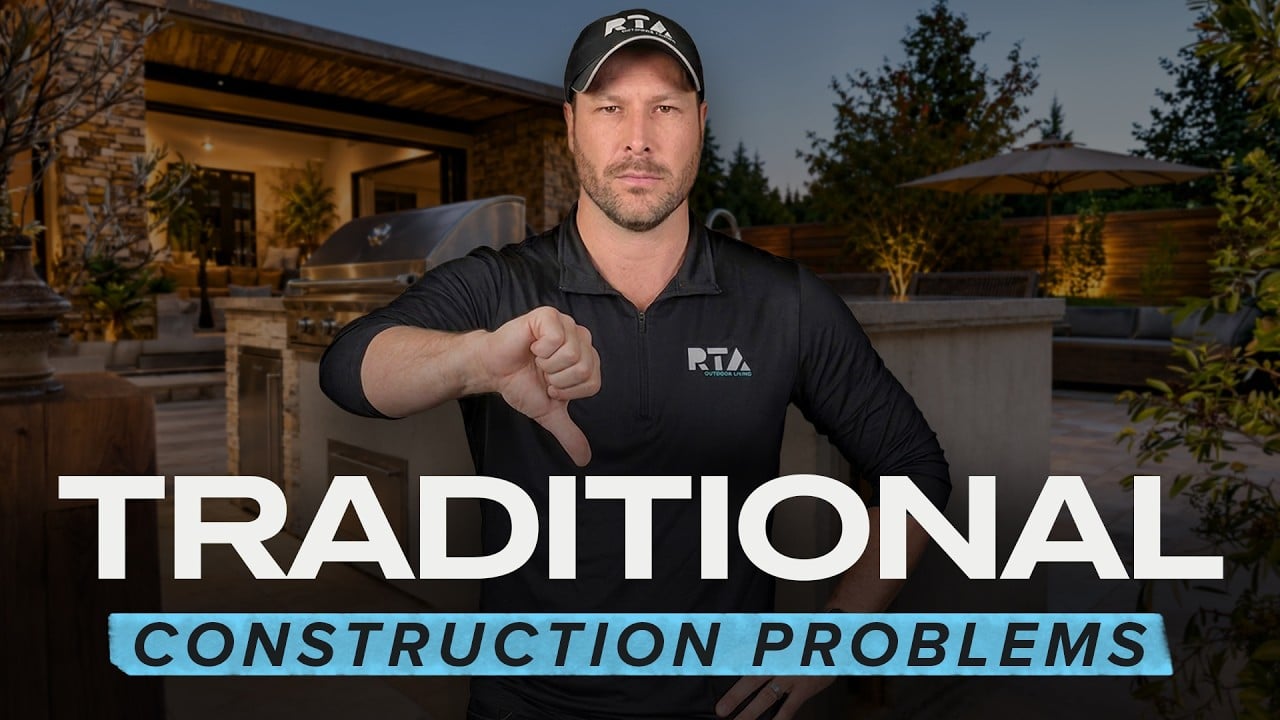
Outdoor Kitchens in Cold Climates: What Actually Lasts

Can an outdoor kitchen survive freezing winters and freeze–thaw cycles? If you live in a colder climate, choosing the right materials and design approach can make the difference between a kitchen that lasts decades… or one that cracks and deteriorates over time.

In this episode of The Outdoor Kitchen Experience, Tim from RTA Outdoor Living explains how to design an outdoor kitchen for cold climates where temperatures regularly drop below freezing. Freeze–thaw conditions are one of the toughest environments for outdoor construction because water can seep into materials, freeze, expand, and eventually cause cracking or structural damage.

In this video, we break down why material selection is critical for outdoor kitchens in cold climates, especially when some traditional building materials absorb moisture and struggle with repeated freezing and thawing. Tim explains why many modern outdoor kitchen systems use durable structural materials designed specifically for outdoor exposure to handle temperature swings and moisture more effectively.

We’ll also cover why drainage and base preparation are just as important in cold climates as they are in rainy environments. Preventing water from pooling around your outdoor kitchen helps reduce the risk of freeze-related damage.

Finally, we’ll discuss countertop materials designed for outdoor environments, along with simple winter preparation tips that can help extend the life of your outdoor kitchen year after year.

The good news? With the right materials and smart design, outdoor kitchens can perform extremely well even in regions with harsh winters.

Did you like this video? | https://bit.ly/OutdoorKitchenExperience

Ready To Design Your Outdoor Kitchen | https://bit.ly/OutdoorKitchenDesignTool

#OutdoorKitchen #OutdoorLiving #BackyardDesign #outdoorkitchendesign

00:00 – Intro
00:14 – How Freeze–Thaw Cycles Damage Materials
00:36 – Choosing Structural Materials for Cold Climates
01:09 – Why Drainage and Base Preparation Matter
01:28 – Best Countertops for Freeze–Thaw Environments
01:51 – Simple Winter Care for Outdoor Kitchens
02:10 – Free Outdoor Kitchen Design Tool & Consultation
Design your dream
outdoor kitchen
right now

Video Transcription

0:00
If you live somewhere with freezing winters and warmer summers, your outdoor kitchen has to handle one of the toughest conditions for building materials, the freeze-thaw cycle. Let’s go through the most important things to consider before you build. The first thing to understand is why freeze-thaw

0:15
cycles can damage certain outdoor kitchens. When water seeps into porous materials and then freezes, it expands. That expansion can cause cracking, shifting, or structural damage over time. This is one reason some traditional outdoor kitchen builds that rely heavily on wood framing or

0:30
moisture-absorbing materials may struggle in the colder climates. Materials that absorb water simply have a harder time surviving repeated freezing and thawing. That’s where material choice becomes extremely important. Many modern outdoor kitchen

0:45
systems are built with structural materials designed specifically for outdoor exposure and weather resistance. RTA Outdoor Living Kitchens are designed for outdoor environments and built with durable materials that help reduce the risks associated with moisture and temperature swings. Because these

1:00
materials are engineered for outdoor use, they tend to perform much better in climates where freezing temperatures are common. Another important factor is drainage and base preparation. Just like in raining climates, weather management is critical. If water pools around the

1:15
structure and then freezes, it can cause long-term issues. Proper installation with a solid base and good drainage helps prevent water from sitting around or inside the kitchen components. Countertop materials also need to be chosen carefully in freeze-thaw

1:30
climates. Some materials are more resistant to outdoor weather conditions than others. Selecting countertops designed specifically for exterior environments helps reduce the risk of cracking or long-term deterioration caused by temperature swings. Finally, it’s worth noting that outdoor kitchens

1:45
in colder climates don’t have to be covered to last. But simple winter care can extend their life even further. Cleaning surfaces, covering the appliances if desired, and preparing the space before winter can help protect your investment. When durable materials

2:00
and proper design are combined, outdoor kitchens can perform very well, even in regions with harsh winters. If you’re thinking about building an outdoor kitchen and want to see what could work in your space, try our free outdoor design kitchen tool. Or, if you’d like

2:15
help designing an outdoor kitchen that works for your climate, you can book a free call with one of our outdoor kitchen experts.

Related Videos

Spencer Becorest RTA Team Member
Chat With Us