




When it comes to constructing an outdoor kitchen, there are two classes of materials: combustible and non-combustible. For better or for worse, combustible materials are often used in outdoor kitchen construction… but there is a key difference between combustible material types.
Hence, the question: “What’s the difference between combustible outdoor kitchen materials that melt and combustible materials that burn?”
As an outdoor kitchen manufacturer that has deeply studied all manner of outdoor kitchen materials… we have a deep experiential knowledge of the differences between combustible materials that burn vs melt, and how that affects your decision-making process. In this article, you will learn considerations for outdoor kitchen materials that burn, considerations for outdoor kitchen materials that melt, and whether or not there’s a better material choice for building your outdoor kitchen.
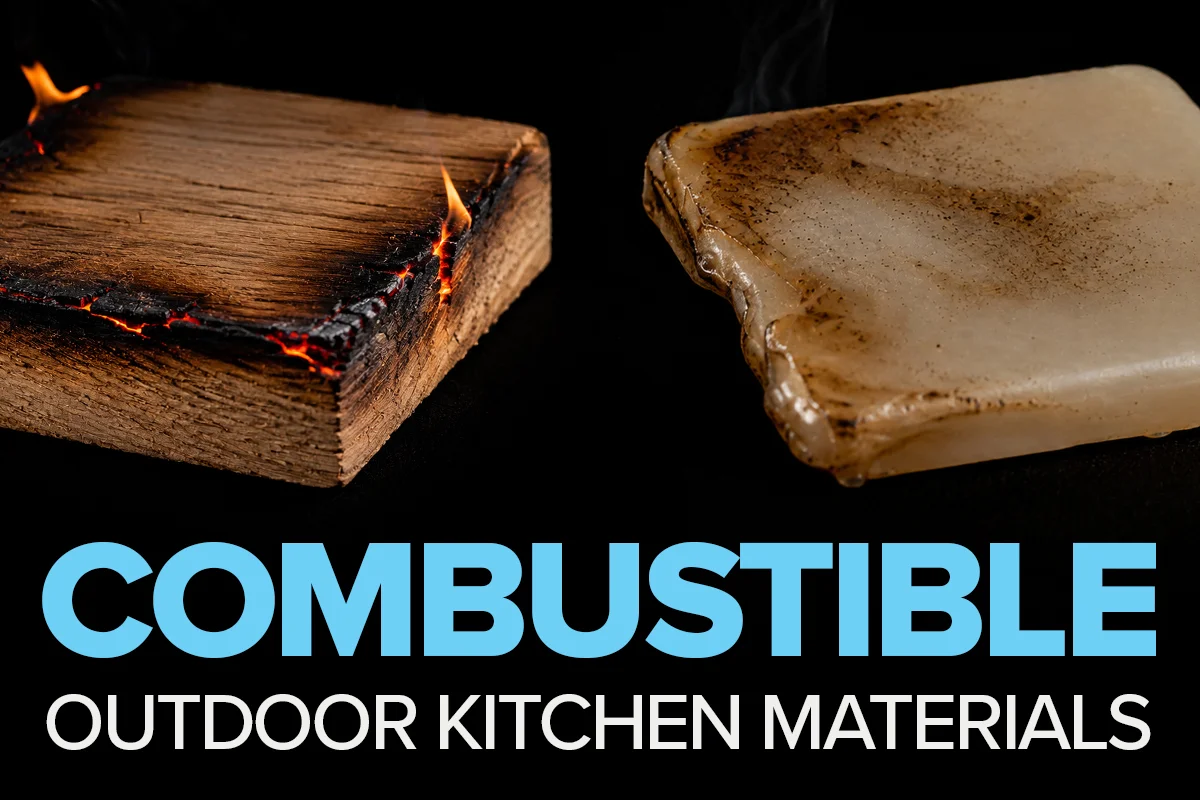
Considerations for Outdoor Kitchen Materials that Burn (Wood)
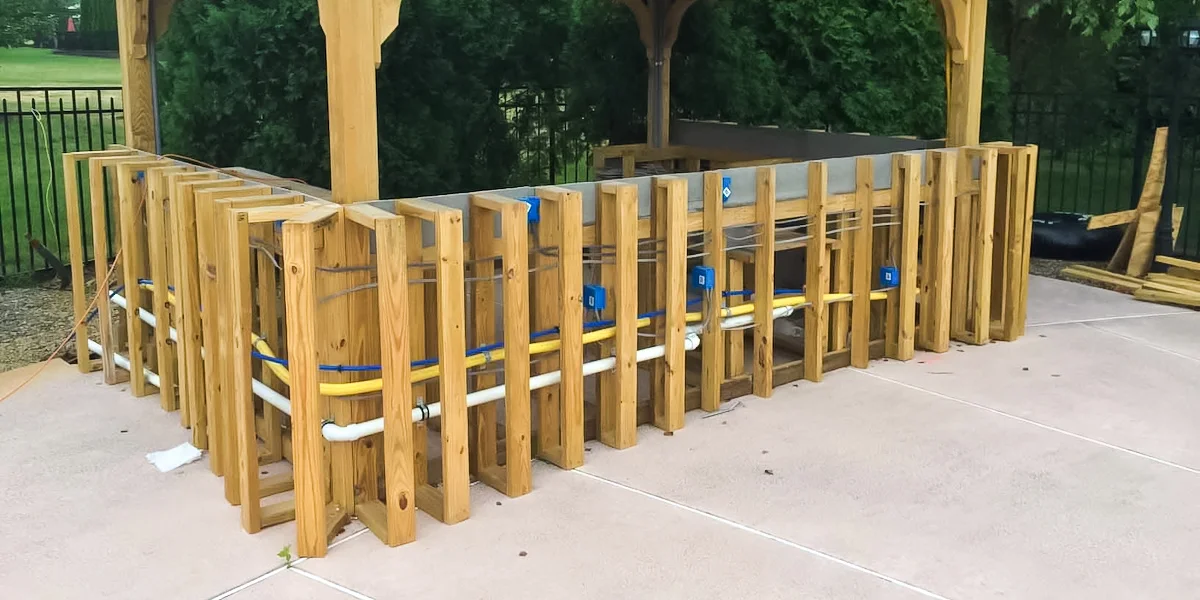
Wood is an extremely common outdoor kitchen material that is combustible, and burns when ignited.
Due to how easily wood can ignite, we never recommend using this combustible material in outdoor kitchen construction. An outdoor kitchen is, in essence, a structure that is designed to hold appliances with an open flame. So when you’re using a material that easily burns to support these appliances, there’s a lot of risk involved. Not only can the wood structure burn down if ignited… it can also spread to other combustible structures nearby, such as a wooden pergola or even your home.
Considerations for Outdoor Kitchen Materials that Melt (Plastic)

Several outdoor kitchen brands also make outdoor kitchens with combustible materials that melt, meaning plastics such as PVC.
Although these plastic materials can burn when exposed to the right conditions… it’s a bit slower to ignite than wood, and burns differently. It tends to melt in a way more akin to candle wax than a straight burn like wood. While this is still a problem, you will get more of a warning to deal with a fire should it break out with a plastic outdoor kitchen.
To reduce the risk of combustion as much as possible, all plastic outdoor kitchens must include insulated jackets with each cooking appliance. This added layer of protection will help prevent the risk of combustion if a grease fire breaks out.
Are There Better Options for Constructing an Outdoor Kitchen?

Now that you understand the difference between outdoor kitchen materials that melt and outdoor kitchen materials that burn… you might be wondering if there’s a better option overall. Is there a material option available that doesn’t burn?
Well, there is, in fact! And it happens to be a material that we’re intimately familiar with: high performance concrete.
Outdoor kitchens from RTA Outdoor Living are made with high performance concrete, which is a completely non-combustible material. So in the unfortunate event that a grill fire breaks out… your outdoor kitchen structure will not contribute to any possible spread or worsening of the fire.
If you’d like to learn more about why high performance concrete is such an excellent choice for your outdoor kitchen, check out this article about it. Enjoy the read, and we’ll catch you in the next one!