




Galvanized steel is an extremely common material used in metal framed outdoor kitchens. It’s so commonplace, in fact… that you’re probably confused as to how it could possibly pose a safety risk.
Why would rust be a significant safety issue for your outdoor kitchen? As an outdoor kitchen manufacturer that emphasizes safety and using top-notch materials… we have a deep understanding of how materials correlate to safety.
In this article, you will learn why galvanized steel can become a safety risk when used in outdoor kitchens… and a safer structural material to use instead.
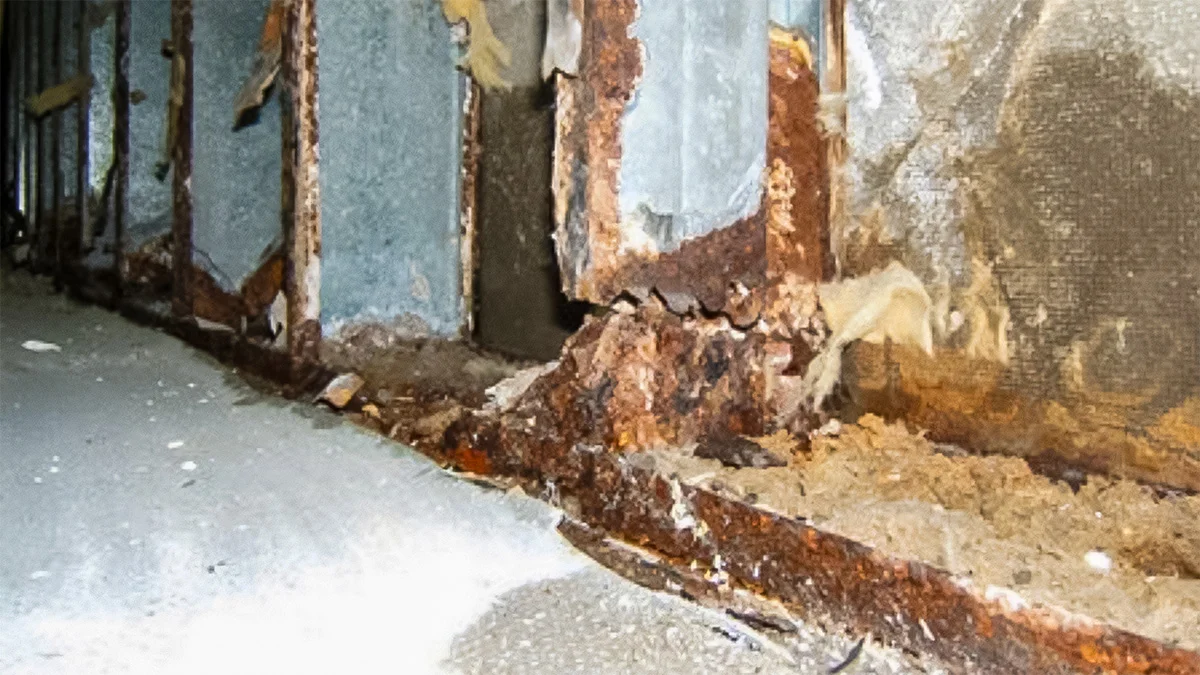
Why is Galvanized Steel a Safety Risk when Used in Outdoor Kitchens?
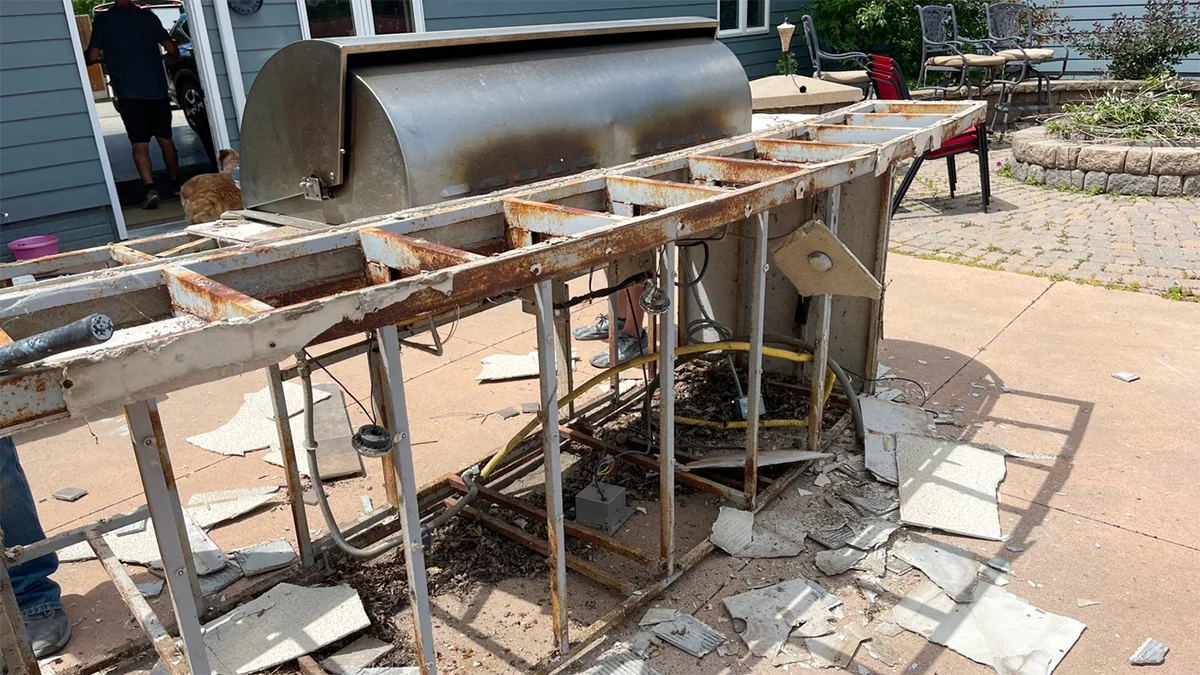
Ultimately, the safety risk associated with galvanized steel framing boils down to one thing: rust.
It may seem like the risk of rusting is unlikely, since the galvanized steel frames sit firmly on the interior of the outdoor kitchen. They’re covered with cement board sheathing, cladding material, and a finish (stone, stucco, brick, etc.)… so is there really much of a chance that rusting will occur?
There is, especially if you live in a harsh climate. Galvanized steel outdoor kitchen frames are well covered, but they’re not sealed and weatherproof. High humidity, temperature fluctuations, snow, ice, hail, and rain are all stressors to your metal framed outdoor kitchen. When exposed to moisture and temperature fluctuation, the layers of your outdoor kitchen expand and contract at different rates. This creates weak points, and allows moisture to enter the interior of your island… which will create the opportunity for galvanized steel frames to rust.
And here’s where the safety issue comes into play. If your galvanized steel outdoor kitchen frames begin to rust… you won’t see or know that it’s happening. And left unchecked long enough, the rust will cause a structural failure. It will no longer be strong enough to support its own weight, leading to a collapse. And if you’re unlucky enough to be using your outdoor kitchen when this happens… it’s a serious safety risk, indeed.
What’s a Safer Structural Material to Use in an Outdoor Kitchen?
With this concern in mind, of course, you’ll want to know about a safer material for use in an outdoor kitchen. Is there something you can use that won’t structurally fail when exposed to the elements?
For optimal durability, high performance concrete will be your best option. In the case of RTA Outdoor Living, our outdoor kitchens are made with structural high performance concrete panels. The panels have the finish fully integrated, and the panel itself is the structural material.
High performance concrete is completely immune to rust and corrosion… so this is a concern you’ll never have to contend with. It’s also extremely hardy in all weather conditions, so no matter where you live, it’s a smart choice.
If this is the first you’re hearing about using concrete in an outdoor kitchen and you want to learn more… this article will provide you with all the information you need. Enjoy the read, and we’ll catch you in the next one!

