


If you’re considering adding an RTA outdoor kitchen island to your backyard… inevitably, you will have to contend with the question of weight at some point.
How heavy is an RTA outdoor kitchen?
This is an essential question to know the answer to for a couple of reasons.
- If you’re installing an outdoor kitchen on a deck… you need to be sure the structure can support the weight of an RTA kitchen.
- If you decide to assemble the outdoor kitchen yourself, you need to know if you have enough strength and help to move everything around.
This article will tip the scales towards your understanding of RTA outdoor kitchen weight. By the time you’re finished reading, you will be equipped with the full context of what an RTA outdoor kitchen can weigh… and help you understand if RTA is the right solution for you or not. We will answer the following question by discussing the weight of all the individual components of an outdoor kitchen (panels, countertops, appliances)… and wrap up with examples of what a total outdoor kitchen might weigh.
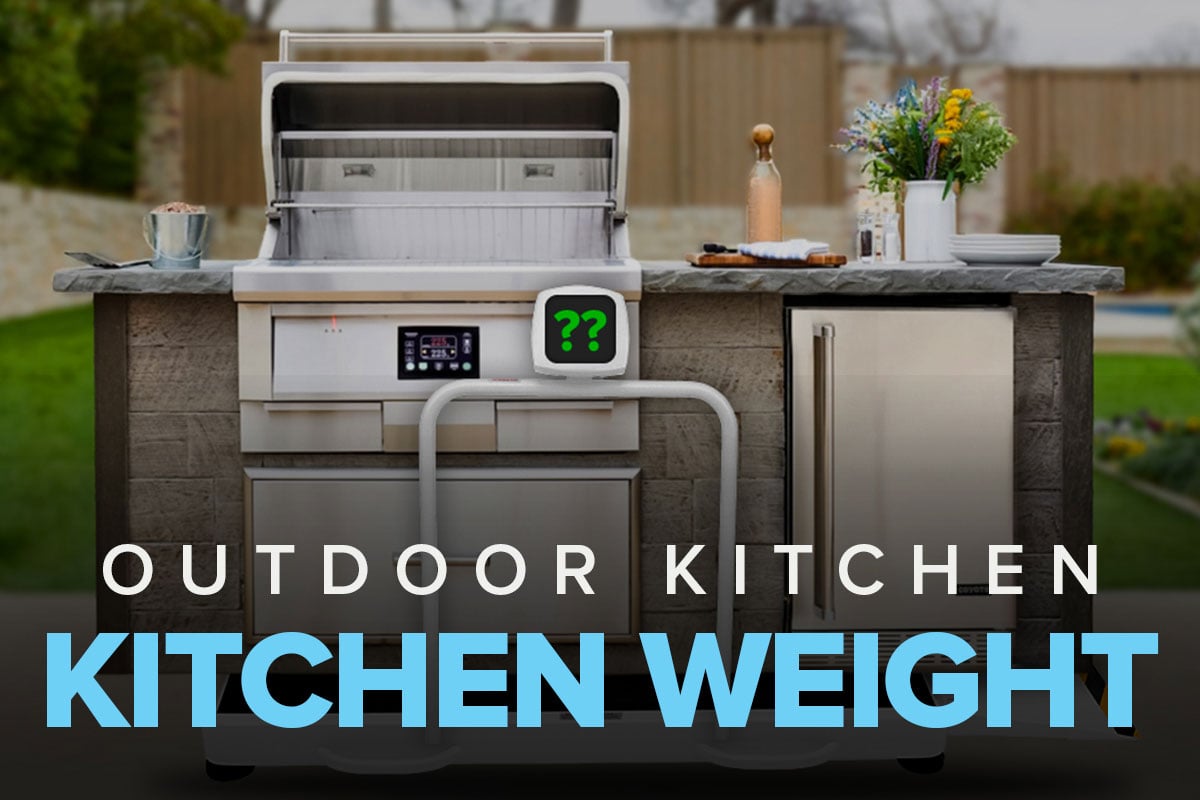
How Much Do RTA Panels Weigh?

Concrete panels from RTA Outdoor Living (our primary line) will weigh approximately 10.5 lbs per square foot.
RTA’s modular HDPE panels (known as MOKs) will weigh approximately 4 lbs per square foot.
To clarify… these weight ranges apply to just the structural panels in both cases. A linear island will comprise 4 structural panels (1 front panel, 1 back panel, and 2 side panels).
The linear weight measurement may be hard to wrap your head around, so here’s a more “concrete” example.
A plain, concrete back panel with no appliance cutouts can easily weigh over 100 lbs, depending on the length. MOKs will weigh roughly 60% less… so an equivalent MOKs panel will weigh around 40 lbs.
How Much Do the Countertops Weigh?
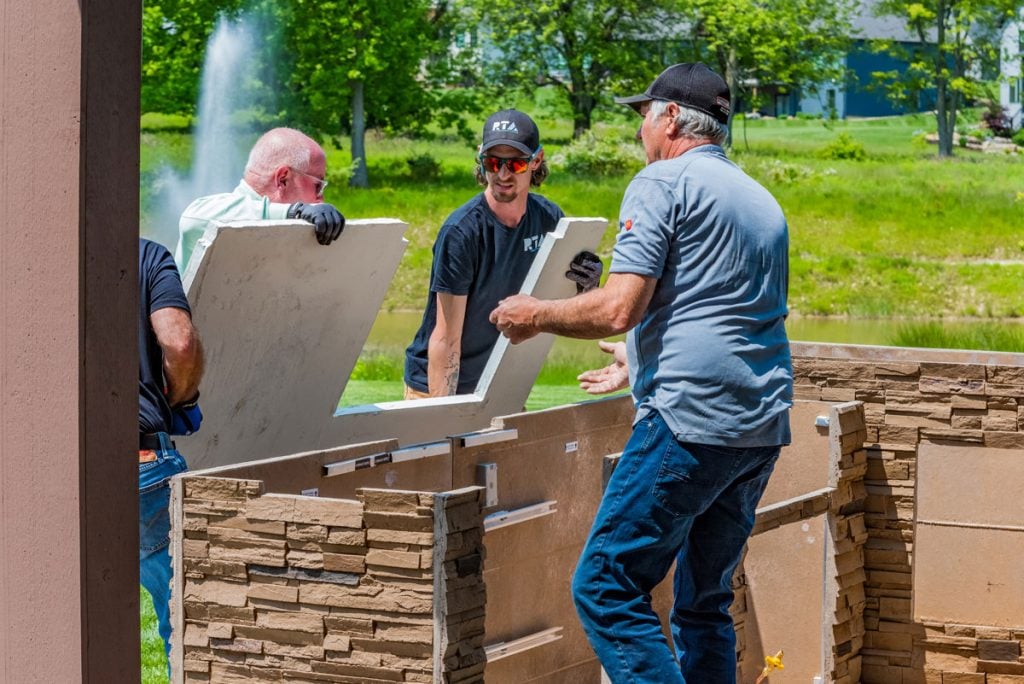
RTA’s composite rebar reinforced countertops weigh around 15 lbs per square foot.
A granite countertop sourced through RTA will weigh approximately 18–19 lbs per square foot.
MOKs HDPE countertops will weigh 4 lbs per square foot, the same as the panels.
So bringing back in the previous example… a plain concrete countertop without any appliance cutouts can easily weigh 200 lbs or more.
How Much Do the Appliances Weigh?
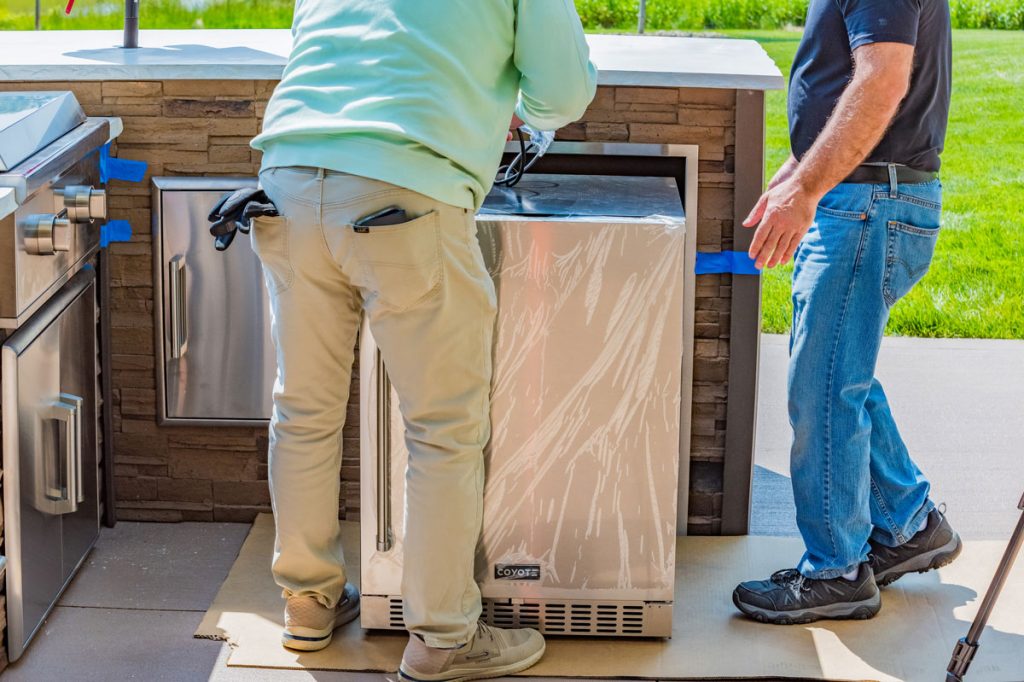
RTA outdoor kitchens come with stainless steel appliances from Coyote Outdoor Living… which will fall into the following weight ranges:
- Built-In Grills: 100–197 lbs
- Asado Smokers: 198–238 lbs
- Pellet Grills: 180–328 lbs
- Flat Top Grill: 115 lbs
- Side Burners: 22–42 lbs
- Power Burner: 68 lbs
- Outdoor Refrigerators / Drop-In Coolers: 44–105 lbs
- Sinks: 11–63 lbs
- Storage Accessories: 11–156 lbs
Ready to Spring Forward with Your Outdoor Kitchen Project?
Why Does the Weight of an RTA Kitchen Vary so Much?
The vast majority of RTA outdoor kitchens are personalized. And when you primarily produce custom outdoor kitchens… something will be different about each one, every time!
Therefore, there’s no clean way to say exactly what your RTA outdoor kitchen would weigh.
However, we can share a few factors at play as to why weight can be so tricky to pin down.
The Length and Size of Your Outdoor Kitchen
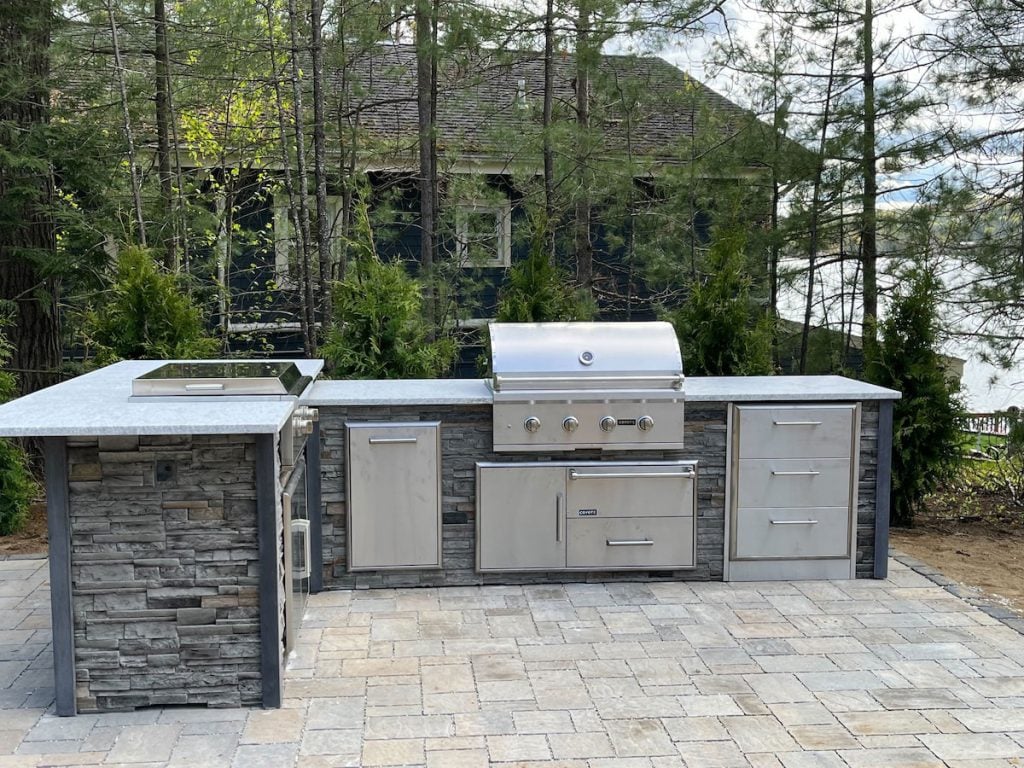
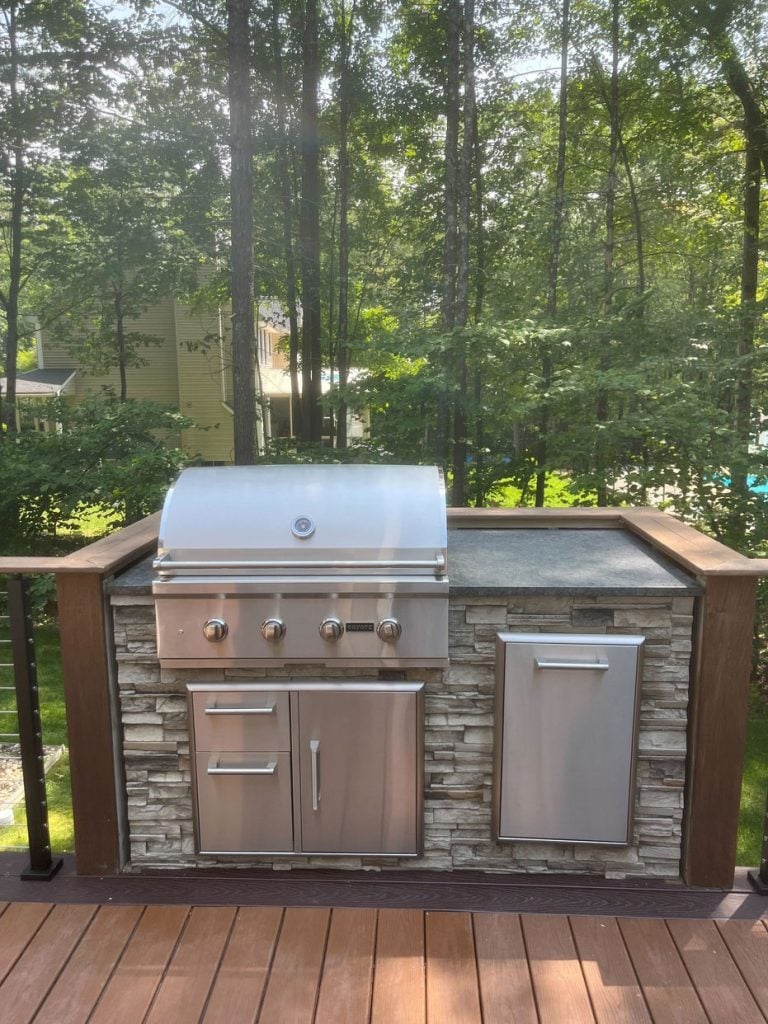
The biggest pendulum swing when it comes to RTA outdoor kitchen weight is the size of your BBQ island.
If you have a small 4’ island with just a modest built-in grill and an access door… this will weigh far less than a sprawling L-shaped design with two 14’ islands and a ton of outdoor cooking appliances.
A larger outdoor kitchen layout will add hundreds of pounds to the total weight without much effort. Be sure to keep this in mind if you are concerned about your deck or patio being able to support a 1,000lb+ structure!
Appliance Selection and Cutouts
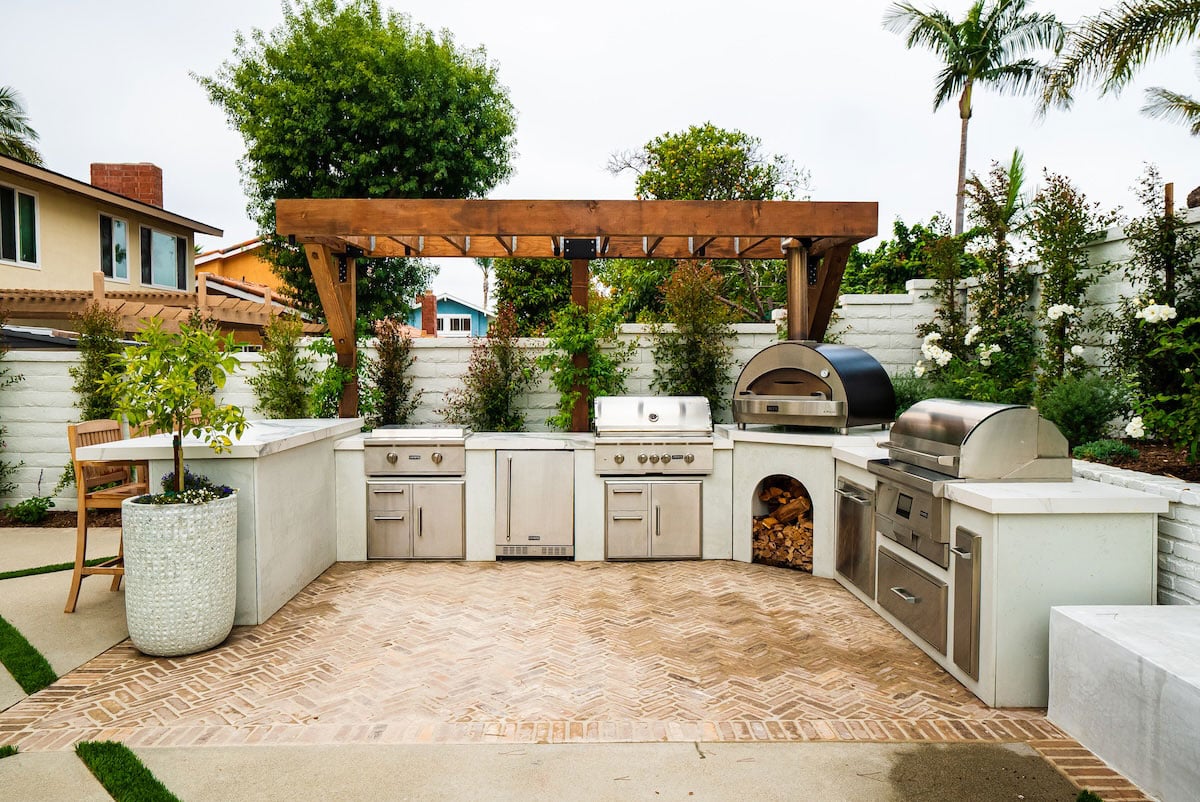
Another factor that fluctuates the weight of one of our outdoor kitchens will be the appliances.
The more appliances you add to your outdoor kitchen, the more weight you are adding.
But conversely, all of those appliances need a cutout to sit or slide into! Which means… all those appliance cutouts are removing some weight from your panels and countertops.
In some cases, the appliance you’re installing may weigh less than the cutout being removed. (Double access doors are a good example.)
In other cases, the appliance you’re installing may weigh more than the cutout being removed.
Sometimes, you might shave off some weight… other times you might add it… and yet other times, it may end up being just a wash.
Your Finish Selection
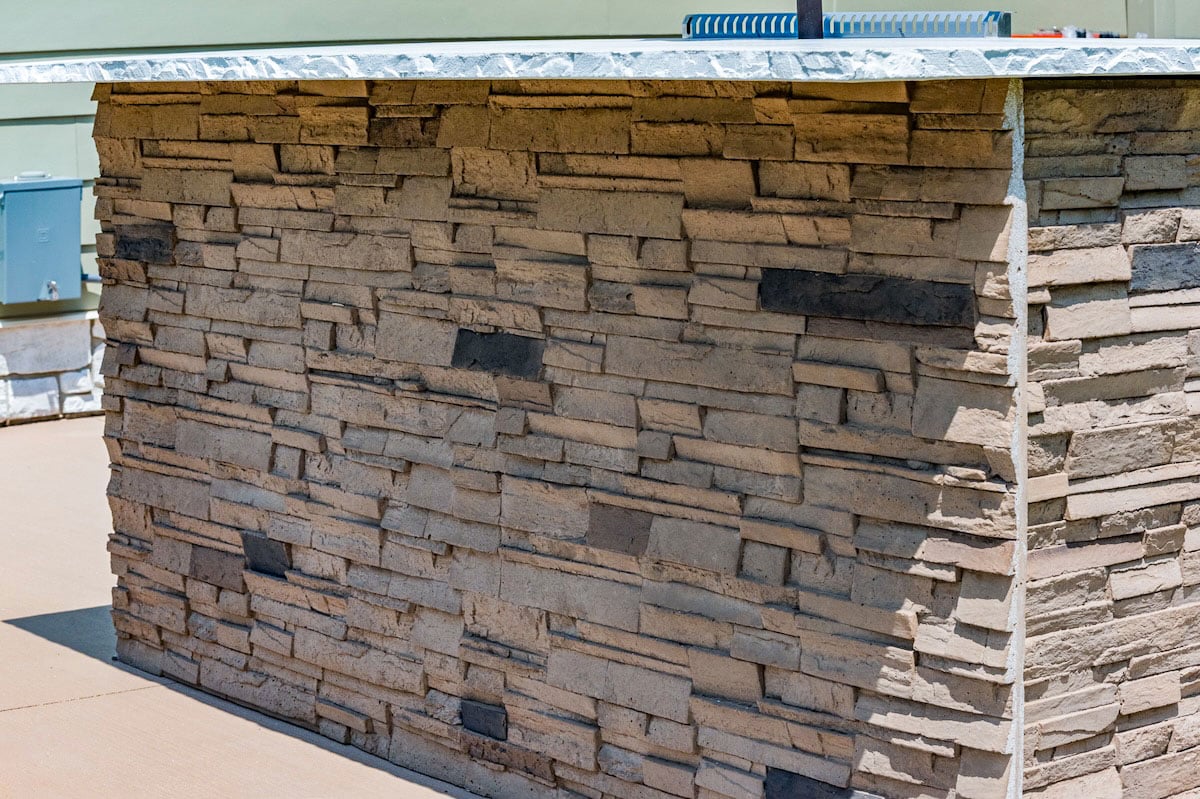
Perhaps surprisingly, the finish you choose will affect the final weight of your panels.
More textured finishes, like stacked stone, will use more concrete to create this look… and thus, will end up weighing more.
On the other side of the spectrum… streamlined modern concrete finishes with no added texture will be among the lightest-weight finish options.
So, How Much does a Completed RTA Outdoor Kitchen Weigh?
As you’ve seen… providing a direct answer to this question proves to be complicated. There are seemingly limitless factors involved in what your completed outdoor kitchen will weigh.
That said, we can share a couple examples of what a full outdoor kitchen setup could weigh.
Take, for example, this 7’ grill island.
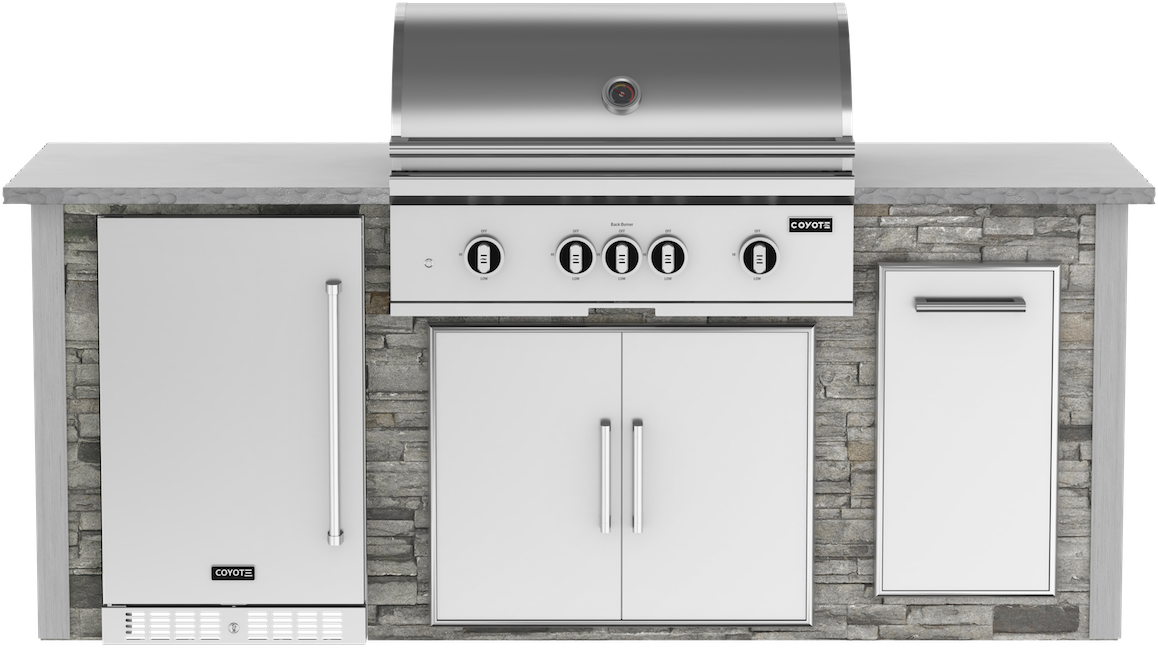
The components of this island weigh as follows:
- Front Panel: 75 lbs
- Side Panels: 130 lbs (65 lbs each)
- Back Panel: 240 lbs
- Countertop: 160 lbs
- Appliances: 301 lbs
- Total Weight: 906 lbs
How about something a little bigger? This 8’ x 9’ L-shaped island should do the trick.
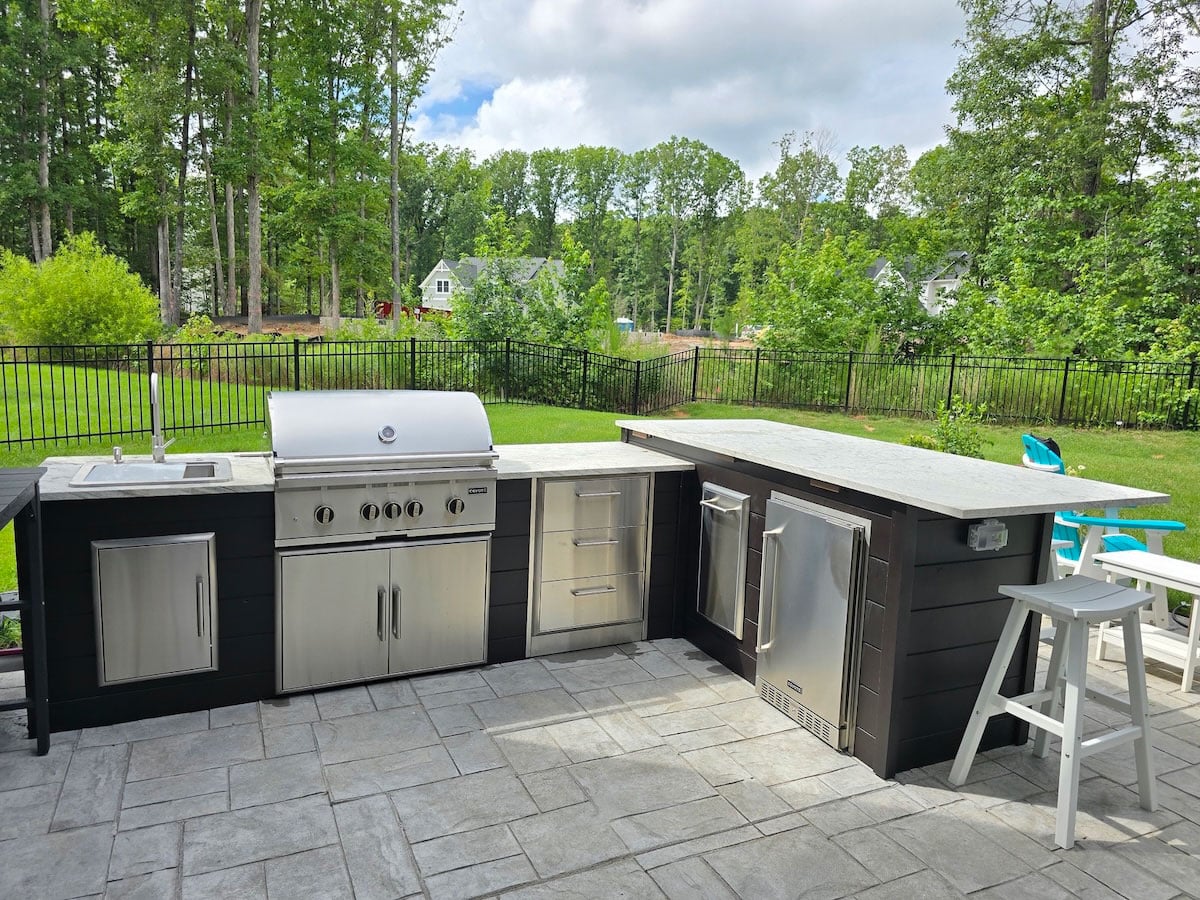
The components of this L-shaped island weigh as follows:
- Grill Island: 800 lbs
- Bar Island: 1,195 lbs
- Appliances: 500 lbs
- Total Weight: 2,495 lbs
So now that you have full context about how heavy an RTA outdoor kitchen is… you should have the information you need to decide if island weight may pose an issue for you, or not.
If you have a strong surface that can handle the weight… and you have enough helpers to carry all the parts… you’re likely feeling positive that RTA could be the right fit for your project.
And if that’s the case, perhaps it’s time to book a free call with one of our Design Experts. They’ll be able to dig into the nitty gritty details of your project, and shepherd you through the process of bringing your dream outdoor kitchen to life.

