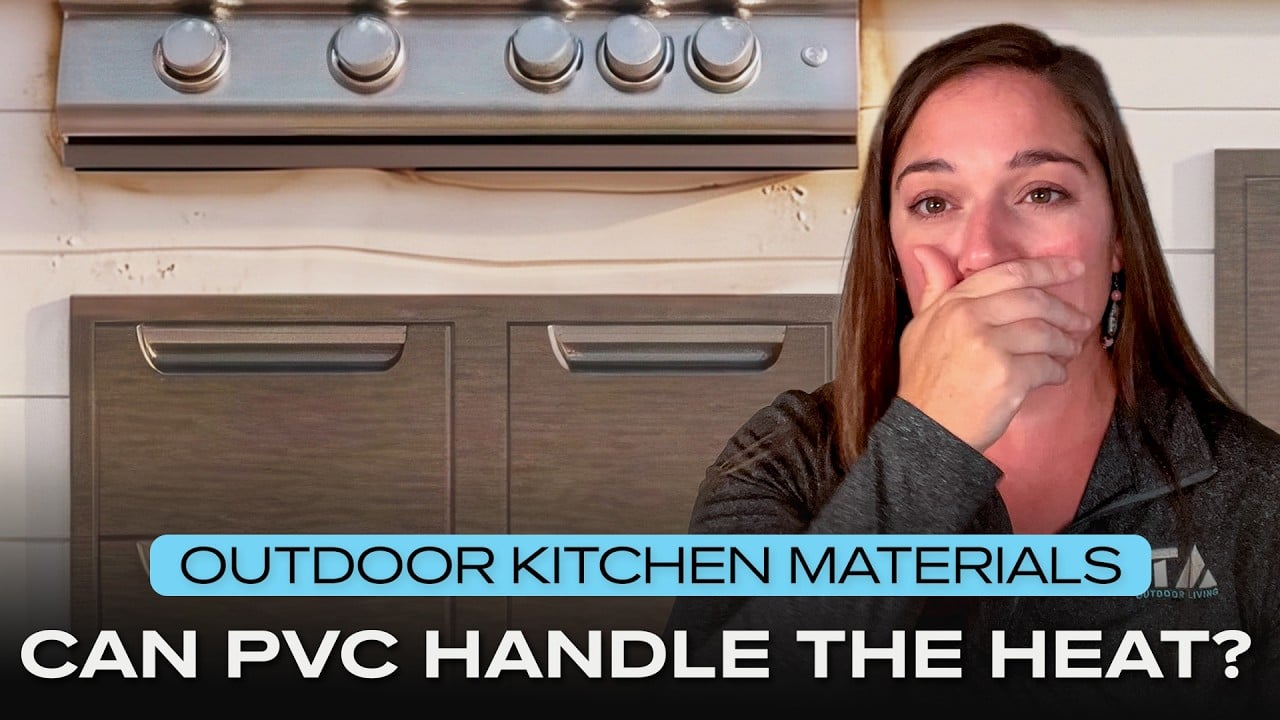




Outdoor kitchen ventilation isn’t just another box to check during your build.
Getting outdoor kitchen ventilation right can make a major difference in safety, heat management, and long-term peace of mind.
In this episode of The Outdoor Kitchen Experience, we explain why RTA Outdoor Living takes ventilation seriously—and why simply meeting a minimum requirement may not tell the whole story.
A built-in gas grill creates significant heat, and gas can behave very differently depending on the fuel source. Propane is heavier than air and can settle lower inside an enclosure, while natural gas is lighter than air and rises. That means outdoor kitchen vent placement should be considered alongside your fuel type, appliance requirements, island configuration, and surrounding space.
We’ll also discuss how poor airflow can contribute to unwanted heat buildup inside a grill island and why ventilation should be part of the outdoor kitchen design conversation from the beginning—not something added at the end.
At RTA Outdoor Living, our design process considers the grill, fuel source, kitchen layout, surrounding structures, and appliance manufacturer requirements together. The goal is to create an outdoor kitchen that looks great while also giving homeowners confidence that important safety considerations have been addressed thoughtfully.
If you’re planning a built-in grill or outdoor kitchen, this is one design detail you don’t want to overlook.
Timestamps
00:05 – Intro
00:13 – Why Outdoor Kitchen Ventilation Matters
01:00 – Why Minimum Requirements Aren’t the Whole Story
01:34 – Propane vs. Natural Gas Ventilation
02:00 – Preventing Heat Buildup
02:30 – How RTA Approaches Ventilation
03:00 – Is RTA the Right Fit for Your Project?
03:33 – Design Your Outdoor Kitchen
Did you like this video? | https://bit.ly/OutdoorKitchenExperience
Ready To Design Your Outdoor Kitchen | https://bit.ly/OutdoorKitchenDesignTool
#OutdoorKitchen #OutdoorKitchenVentilation #OutdoorLiving #BackyardDesign #BuiltInGrill