

If you’re researching different outdoor kitchen options, and RTA Outdoor Living is on your consideration list… you are likely wondering about weather. How will adverse weather conditions affect RTA outdoor kitchen panels?
In the development stage of RTA outdoor kitchens, we spent an immense amount of time examining this exact topic. We wanted to engineer an outdoor kitchen solution that would thrive in the harsh New England climate, so all different types of weather conditions were tested and considered.
In this article, you will learn how weather affects RTA outdoor kitchen panels, and if it’s a good choice for your climate or not.
How does Weather Affect RTA Outdoor Kitchen Panels?
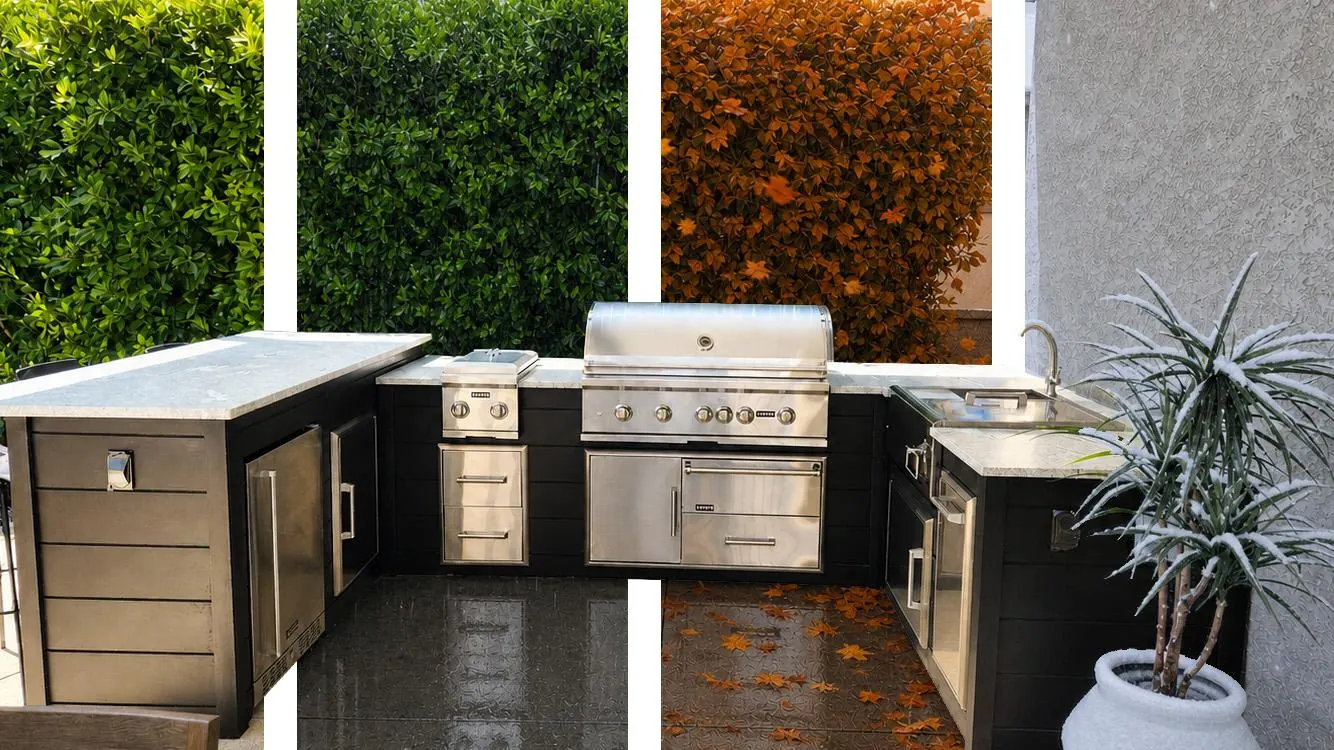
In general, RTA outdoor kitchens are completely unaffected by various weather conditions. Below is an exploration of what happens when RTA outdoor kitchen panels are exposed to different weather stressors.
Rain & High Humidity
RTA outdoor kitchen panels are made from high performance concrete. It’s not a non-porous material, however, it does have low-porosity. So when exposed to rain, ambient moisture, or even flooding… very little water is absorbed into the panel.
This is important because other common outdoor kitchen materials can readily absorb moisture. Wood and cement board are the two materials you’ll see most frequently. In the case of wood, this moisture exposure can lead to mold, rotting, warping, and swelling… and in the case of cement board, the moisture absorption can cause swelling that damages the exterior layer of your island. This would manifest as cracked stucco or stone veneer popping off, for example.
So RTA outdoor kitchen panels don’t really absorb moisture, which is a good thing. Another important quality of RTA panels is that they are monolithic, or single-layer. Meaning, the finish is fully integrated into the panel, which is also structural. Therefore, there is no multi-layer system that can get damaged from moisture absorption, unlike traditional methods.
Salty Ocean Air
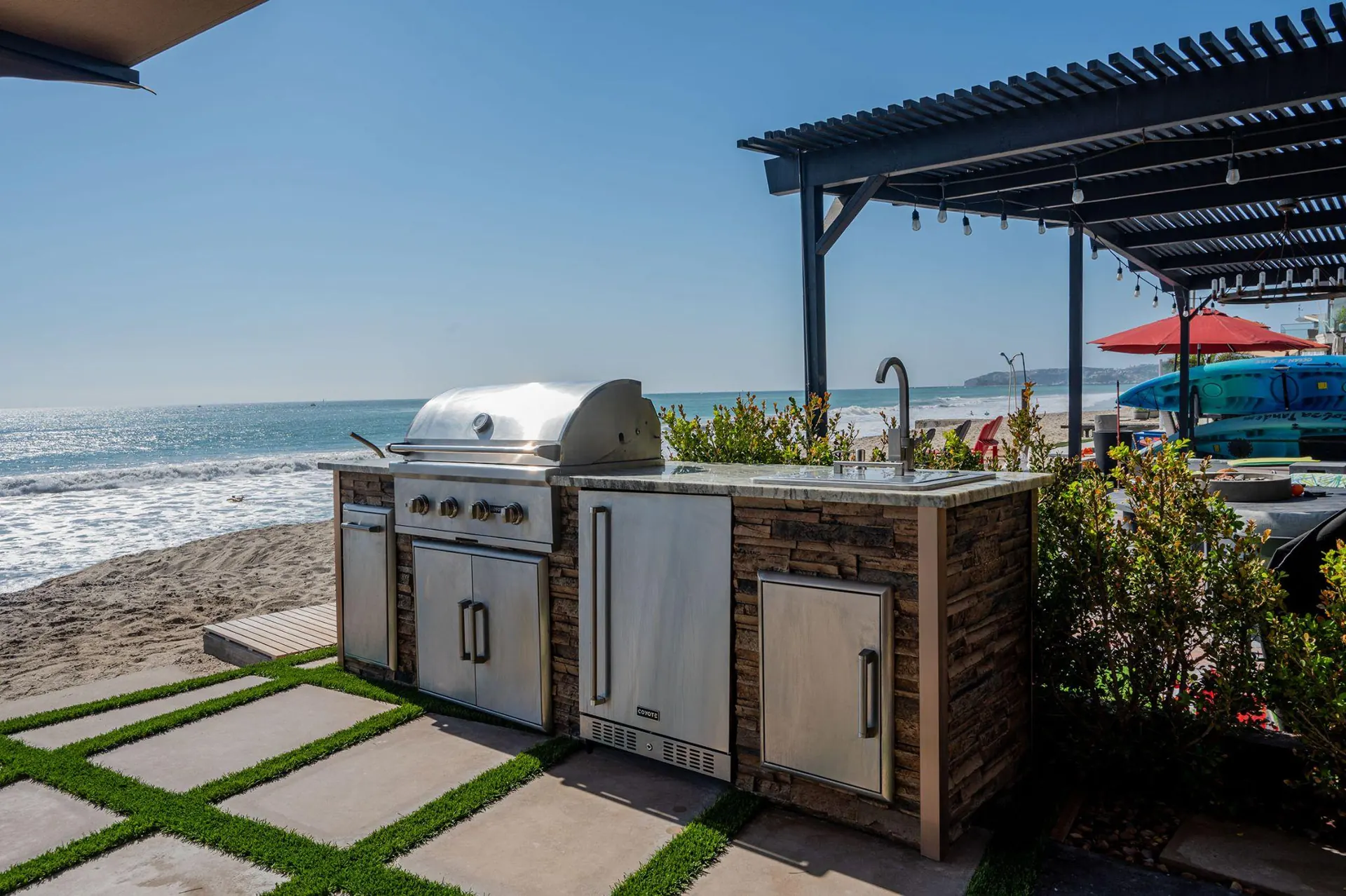
We’ve established that RTA outdoor kitchens don’t really absorb moisture. But what if the panels are exposed to salty ocean air? Well, nothing. High performance concrete does not rust or corrode, so this is not a concern.
If you’re considering an aluminum or stainless steel outdoor kitchen, rust and corrosion is a significant concern in coastal climates… especially if you are using a low-grade metal.
High Winds
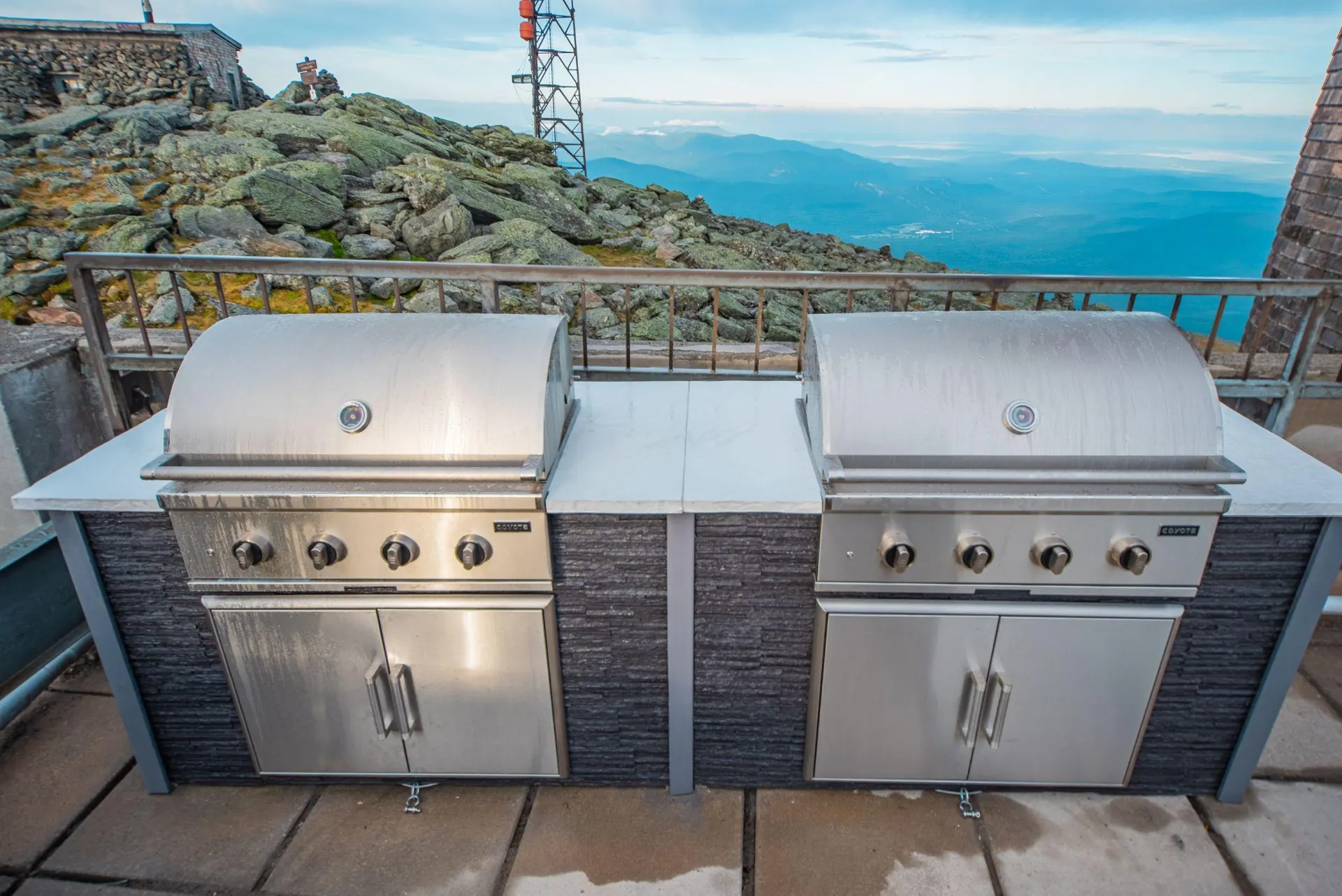
Generally speaking, RTA outdoor kitchen panels are unaffected by high winds. Of course, an RTA outdoor kitchen wouldn’t be safe from an extremely destructive hurricane or tornado… but nothing else would be, either!
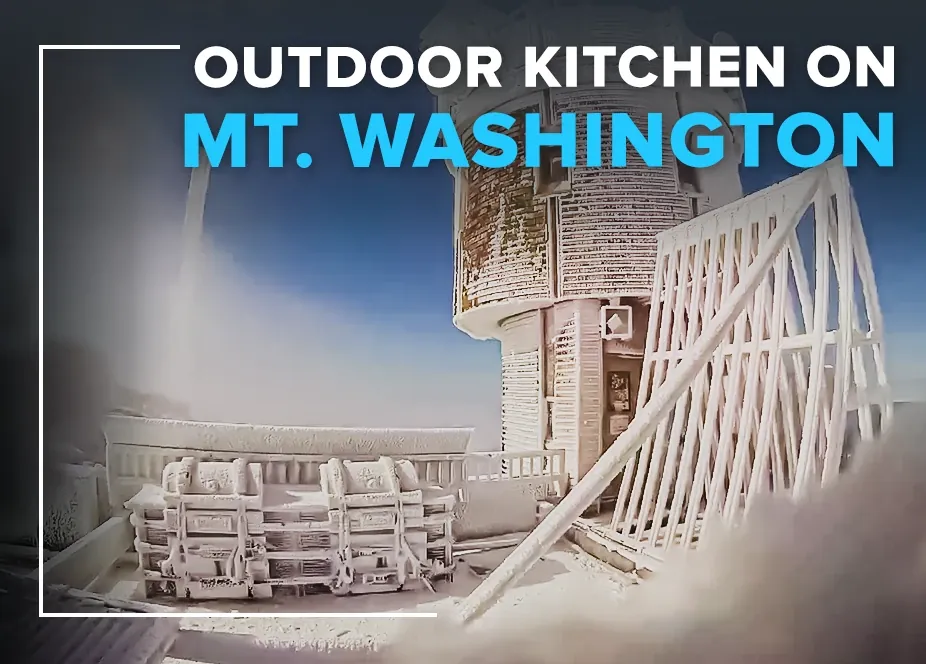
At the time of writing, we have an RTA outdoor kitchen installed at the Mount Washington observatory to put our islands to the test. Mount Washington is known for having the worst weather in the world, and has some of the highest wind gusts ever recorded (231 MPH in 1934). So far, things are looking good… but you can see the live feed to check up on it here.
Snow, Ice, & Hail

As we mentioned previously, RTA outdoor kitchen panels were specifically engineered to thrive in the New England climate… where snow, ice, and hail are simply a fact of life. RTA’s high performance concrete panels will not be damaged by harsh, cold winters.
High performance concrete doesn’t crack from freezing temperatures, or get damaged from snow and ice freezing onto it. Additionally, because there’s little moisture absorption and single-layer construction… frequent freezing and thawing will not negatively impact RTA panels. Whereas, with traditional construction methods, a harsh winter can wreak havoc on those systems.
Extreme Heat & UV Rays
What happens when RTA outdoor kitchen panels are exposed to extreme heat and brilliant sun, like you find in Arizona or Nevada? Well, aside from getting warm to the touch, nothing! RTA panels will not be affected by extreme temperatures, and won’t fade in the sun. Even if this does happen over time, we offer touch-up paints to keep your panels looking brand new.
Traditional metal framed outdoor kitchens will fare well in this climate as well… but you may want to steer clear of PVC or plastic outdoor kitchens, as these can warp and fade under these conditions.
Are RTA Outdoor Kitchen Panels a Good Choice for Your Climate?
Now that you have a grasp on how RTA outdoor kitchen panels will respond to different weather conditions… how do you know if they’re a good option for your climate?
Depending on where you live, weather conditions can vary widely. From hot and humid, to cold and snowy, to flood-prone areas, to salty oceanside air… it can be hard to pin down more detailed information.
Lucky for you, we have dedicated articles for the best outdoor kitchen solution in all different climates… including how RTA outdoor kitchen panels fare in each one. Find the right article for your needs below:
- Best Outdoor Kitchen Solution in a Coastal Climate
- Best Outdoor Kitchen Solution in a Dry and Hot Climate
- Best Outdoor Kitchen Solution in a Cold Climate
- Best Outdoor Kitchen Solution in a Rainy Climate
- Best Outdoor Kitchen Solution in a Humid Climate
Enjoy continuing your outdoor kitchen research, and we’ll catch you in the next one.