


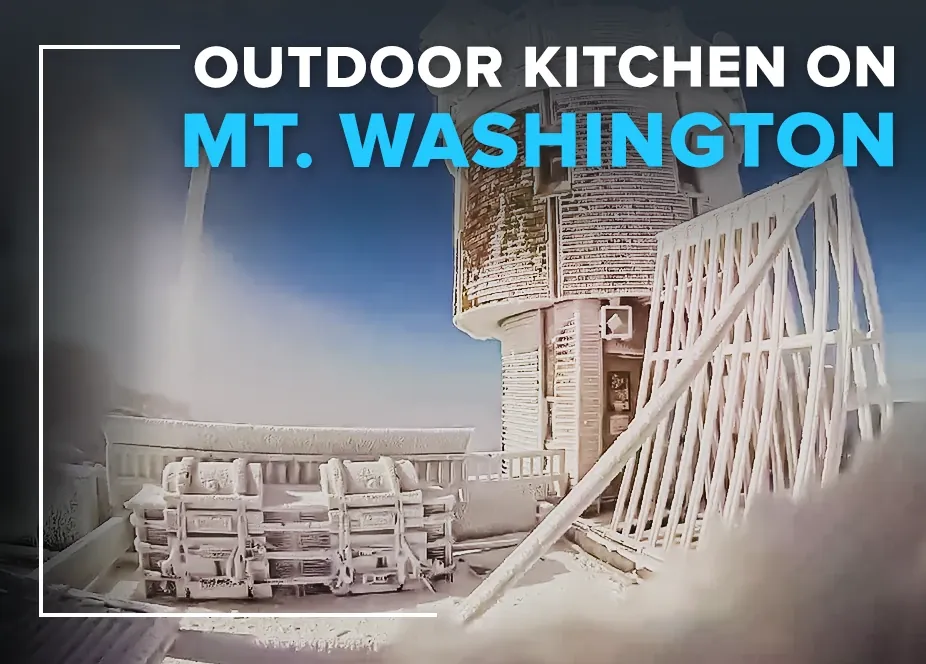


If you’re planning on building an outdoor kitchen… there’s likely an assumption that all materials an outdoor kitchen can be built from are outdoor-rated.
Unfortunately, this isn’t the case! Many commonly used materials for an outdoor kitchen actually aren’t optimal… and especially in harsh climates, can fail in a relatively short period of time. So of course, you’re wondering: “What outdoor kitchen materials fail outside?”
As an outdoor kitchen manufacturer who has engineered an outdoor kitchen solution designed to thrive in all climates… we have gained a solid understanding of what common outdoor kitchen materials fail, and why this happens. In this article, you will learn about what outdoor kitchen materials fail, why they fail, and what outdoor kitchen materials are best to use.
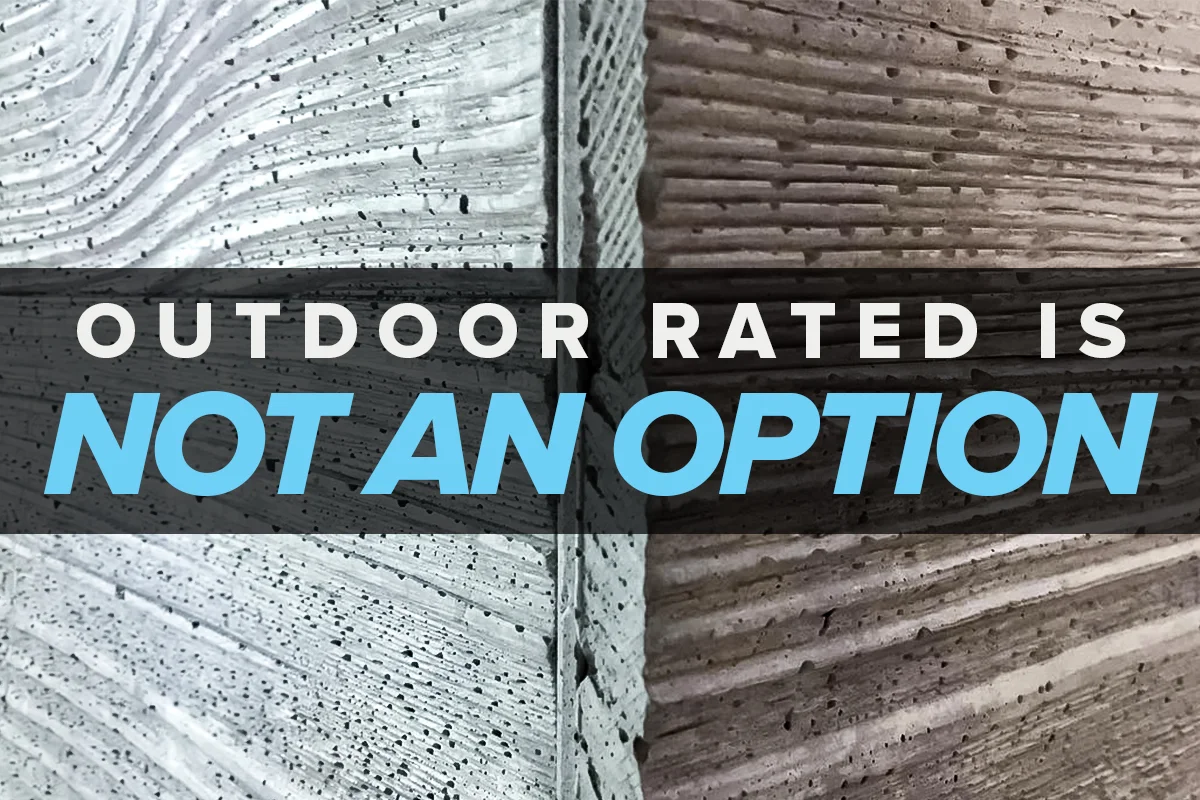
What Outdoor Kitchen Materials Fail Outside, and Why?
Wood, cement board, metal frames, and stucco or tile finishes are commonly used outdoor kitchen materials that have a high failure rate.
Wood
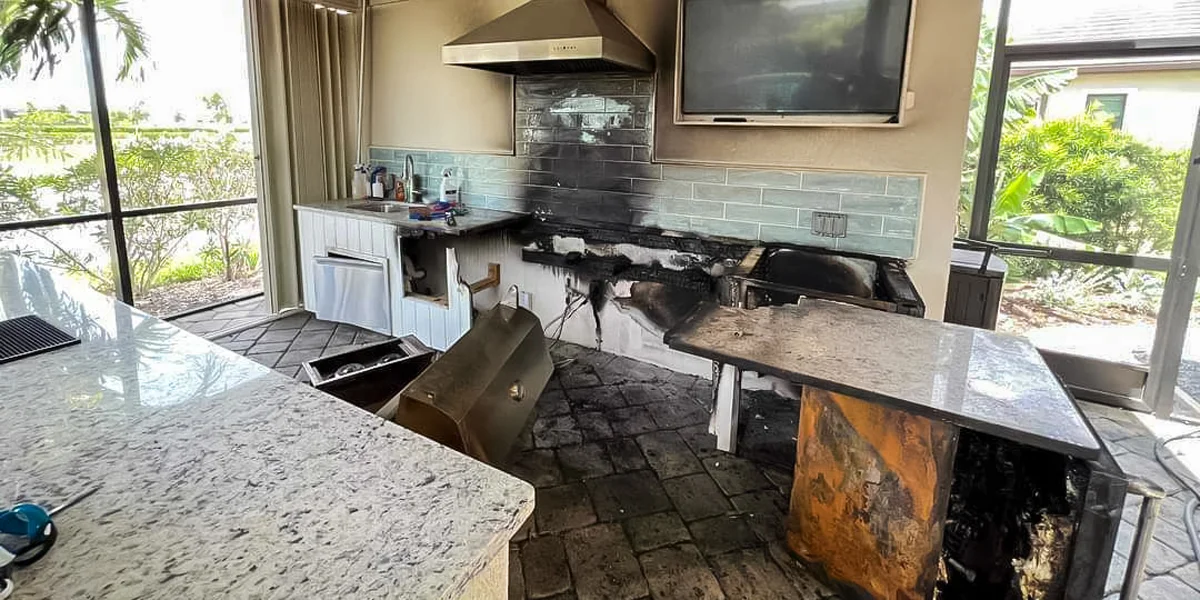
Just from a safety standpoint alone, we always recommend against using wood in an outdoor kitchen in any capacity. Wood is a combustible material, and it should not be in close contact with an open-flamed appliance such as a grill. (Which is exactly what an outdoor kitchen is!)
Safety aside, wood isn’t an optimally outdoor-rated material either. Even with pressure treated wood, at the end of the day… it’s an organic material that will break down over time when left outside. Wood will readily absorb moisture, leading to issues with swelling, warping, and rotting. And if you live in a termite-prone area, insect damage is yet another issue you’ll have to contend with. If you live in a rainy, flood-prone, or cold climate, it can take as little as a season or two for problems to start to show up.
Metal Frames

For custom outdoor kitchen builds, metal framed structures are the most commonly used method. These outdoor kitchens feature steel or aluminum frames that form the load-bearing structure of your outdoor kitchen. From there, cement board is applied, to which a finish material is applied.
Metal frames don’t have the combustibility issues of wood, and they are overall more resilient. Metal frames won’t get eaten by insects, and it can’t mold or rot. However, metal framed outdoor kitchens are still prone to failure in the outdoor environment… especially in harsh climates.
The primary issue with metal frames is their susceptibility to moisture, if moisture is allowed to penetrate the island. If you have frequent temperature fluctuations or freeze thaw cycles, moisture can enter the interior of your outdoor kitchen. Over time, this moisture exposure leads to the rusting and corrosion of the metal frames. And since these frames are well-covered and hard to see… it’s likely you won’t notice there’s something wrong until there’s significant damage that needs to be addressed.
Cement Board

As mentioned previously, metal framed outdoor kitchens are constructed with a layer of cement board sheathing. Cement board doesn’t offer structural integrity to your outdoor kitchen, it is simply a surface that the finish will be applied to.
What’s the problem with cement board? Well, it readily absorbs moisture. Some brands will have higher moisture absorption rates than others, but all are permeable to some degree. This problem is exacerbated if the cement board has contact with the ground. When it rains, the cement board will be able to slowly wick up moisture from the ground, causing swelling which can crack your finish. If you live in a cold climate, winter’s constant freezing and thawing will only accelerate the damage.
Stucco / Tile Finishes

Many finish materials may be used on a metal framed outdoor kitchen, and all are susceptible to problems caused by moisture-damaged cement board. That said, in our experience, stucco and tile finishes tend to fail most frequently. Rapid temperature changes and freeze thaw cycles put excessive pressure on tile grout, leading to cracks or tiles popping off. The same occurs with stucco. And since stucco is often applied in a thin layer, any cracks need to be addressed quickly to prevent further damage to the interior.
How do I Get an Outdoor Kitchen That Lasts? What Materials Should I Use?
So now that you know what outdoor kitchen materials you should avoid, the question remains: “What outdoor kitchen materials should I use instead? What is actually outdoor-rated?”
Well, from our experience… there’s 3 types of materials that truly perform well outside:
- RTA High performance concrete
- 304 stainless steel
- Marine grade HDPE (high density polyethylene)
Why are these materials a long-lasting choice for your outdoor kitchen? Below is a brief overview of each.
RTA High Performance Concrete:

- Non-combustible
- Impervious to rust, corrosion, rot, swelling, and insect damage
- Low porosity and doesn’t readily absorb moisture, making it resilient to humid and freeze thaw conditions
- Rated for 100 years
- Single-layer construction, so there’s no risk of the finish separating from the base material. The finish is fully integrated into the structure
304 Stainless Steel:

- Highly rust and corrosion resistant
- Won’t swell or warp
- Particularly good choice for built-in grills and appliances
Marine Grade HDPE:

- Not susceptible to rust, corrosion, rot, swelling, or insect damage
- Non-porous and doesn’t absorb moisture at all, making it resilient to humid and freeze thaw conditions
- *Note that this is a combustible material, so insulated jackets will need to be paired with every cooking appliance
Now for the other part of your question: “How do I get an outdoor kitchen that lasts?” Well, that’s where we come in! If you want an outdoor kitchen solution built with materials that are guaranteed to thrive in your climate… RTA is likely to be the best option for your needs.
But to be sure that’s the case, a great place to begin is by hopping on a call with a Design Expert. Yes, they’ll discuss your desired layout and design… but they’ll also deeply educate you on different outdoor kitchen materials and whether or not RTA is truly the right fit for your project. Schedule a free consultation right below!

