


When you’re getting ready to build an outdoor kitchen… you might find yourself surprised by the potential requirements you need to follow. Depending on your locale, there may be permitting and local codes involved. Plus, appliance manufacturers often have their own guidelines as it relates to their use in an outdoor kitchen.
So it raises the question: “Which should you follow? Local codes or appliance manufacturer requirements?”
As an outdoor kitchen manufacturer that has encountered both sides of the coin for thousands of homeowners, we feel well-equipped to answer this question. In this article, you will learn about local codes vs appliance manufacturer requirements, what local codes usually cover, what appliance manufacturer requirements usually cover, and getting started with your new outdoor kitchen.
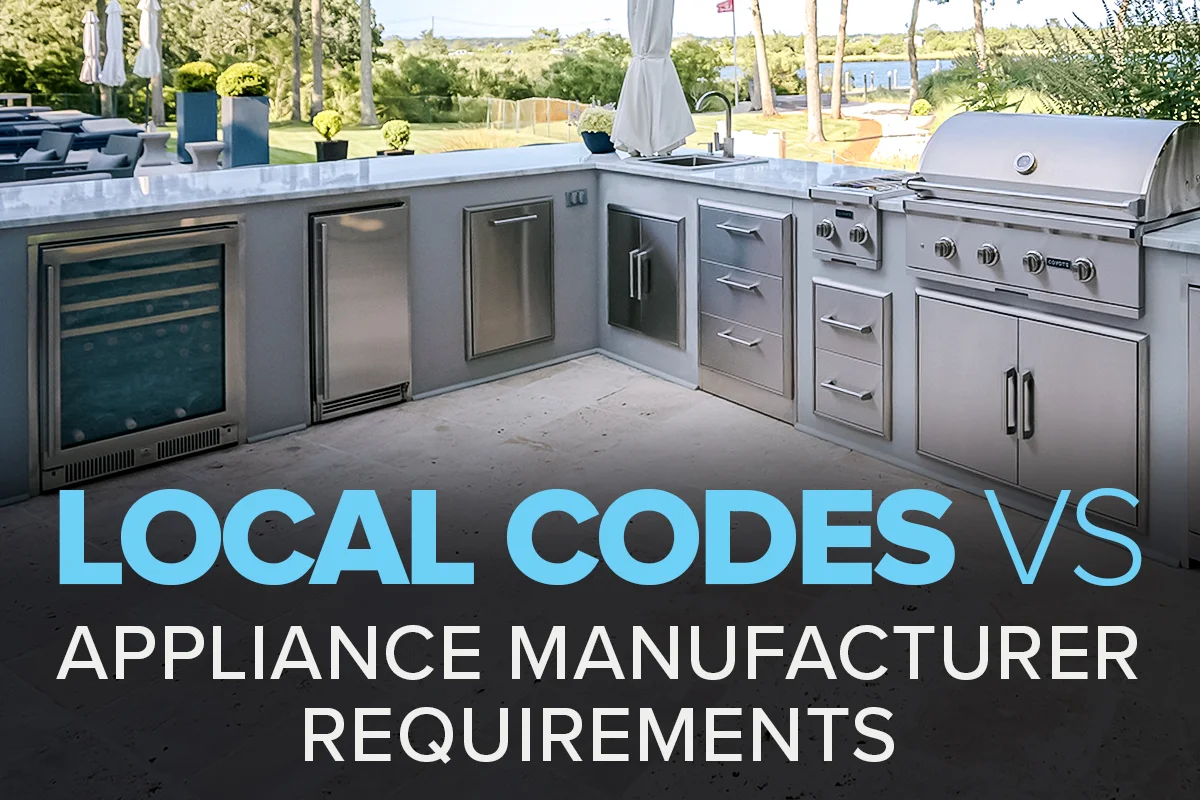
Local Codes vs Appliance Manufacturer Requirements: Which Should You Follow?

In truth, local codes and appliance manufacturer requirements are equally important… and their respective requirements usually don’t overlap. This means that there’s generally not a contradiction between local codes and appliance manufacturer requirements, so you should be able to meet both standards without conflict.
It’s also worth noting that not all locales require permitting or even have building codes for an outdoor kitchen. In the event that you’re not beholden to local code, you only have to be concerned with meeting appliance manufacturer requirements. Of course, check with your local town office about any potential permitting or building requirements before proceeding!
What Local Codes Usually Cover (If You Have Them)

If your locale requires permitting and adherence to local building codes, there’s generally only two things your town is concerned about: utilities and permanent structures.
- Utilities: If you’re planning to install gas lines, electric lines, and/or water lines, this is the most likely scenario where your town will want a say in how it’s done. They may require permitting, and will generally require a licensed professional to install the lines for you. They may also have requirements such as using outdoor-rated GFCI outlets, etc.
- Permanent Structures: Most towns and cities won’t force a permit unless the structure you intend to build is considered permanent, and not all outdoor kitchens are considered permanent structures. It’s important to communicate with your outdoor kitchen supplier and town office to confirm whether or not the outdoor kitchen you intend to build is considered a permanent structure or not. If it is, you may need permitting and have additional requirements to adhere to.
What Appliance Manufacturer Requirements Cover

Appliance manufacturer requirements for outdoor kitchens generally have to do with ensuring the structure provides a safe housing for the appliance. This can mean a few things:
- Island Ventilation Requirements: Your desired appliance manufacturer will typically have a requirement for how your outdoor kitchen is ventilated. They may require a certain number of vents, dictate placement of vents, require a minimum square inch ventilation, or all three of these. The island ventilation requirement ensures that any heat or gas can effectively flush out of your island for safe operation.
- Distance from Combustibles Requirements: Appliance manufacturers also have setback requirements from combustible structures, such as an overhead pergola or your house. For example, Coyote Outdoor Living has a 15” appliance setback requirement from all combustible structures. These distances are important to maintain, because in the unfortunate event of a grill fire, this helps keep the blaze contained to one area.
Getting Started with Your New Outdoor Kitchen

Now that you understand the differences between local codes and appliance manufacturer requirements, and how to follow them… you’re hopefully feeling more confident about taking the next step with your outdoor kitchen project.
If you haven’t already, a great first step is to create an outdoor kitchen design. This will give you a template to work from and figure out what is needed in terms of backyard preparation. Best of all, you can have a custom design ready in minutes with the help of our free online design tool! In just 5 simple steps, you’ll get a 3D render of your dream design pictured right in front of you. Get started with your design, and we hope to hear from you soon!