


As you consider all the important factors in deciding what type of outdoor kitchen to build… there’s one aspect that’s not frequently discussed, but worth your time to learn about: compressive and flexural strength.
If you’re not familiar with this concept, naturally, you’ll be asking: “Why does compressive and flexural strength matter in an outdoor kitchen?”
As an outdoor kitchen manufacturer that spends a great deal of time researching this very topic for our own outdoor kitchen line… we feel well-equipped to inform you about compressive and flexural strength in an outdoor kitchen. So in this article, you will learn why compressive and flexural strength matter in an outdoor kitchen, and which solution provides the best of both worlds.
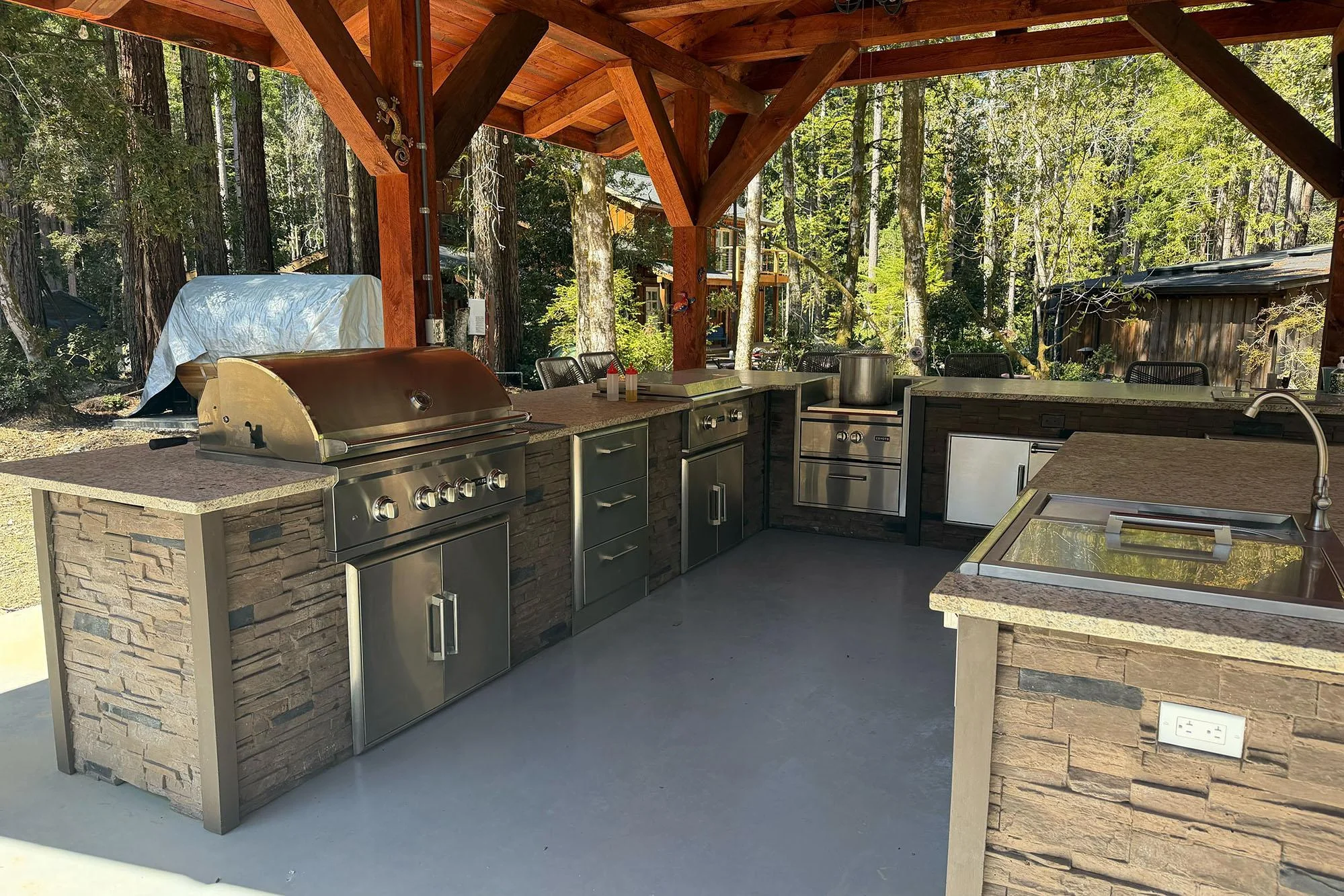
Why does Compressive Strength Matter in an Outdoor Kitchen?
First of all, if you’re unfamiliar, what is compressive strength? Compressive strength describes a material’s ability to withstand compressive pressure. The more pressure it can withstand before failing, the better compressive strength it has.
This is important in the context of an outdoor kitchen because the island structures and countertops will be under a constant compressive load. The countertops need to support appliances that can weigh well over 100lbs each, and the island needs to support both the appliances and the countertops… which are also several hundred pounds on their own. If your outdoor kitchen materials don’t have sufficient compressive strength, they can fail under the constant load.
Why does Flexural Strength Matter in an Outdoor Kitchen?

On the other hand, we have flexural strength. Flexural strength describes a material’s ability to withstand flexural pressure, or bending. The more bending the material can withstand before it snaps, the better flexural strength it has.
In the context of an outdoor kitchen, this is primarily important in regards to shipping or any movement the outdoor kitchen would be exposed to. Since outdoor kitchens are generally shipped to the installation location and never moved again… it’s usually a temporary concern. But if you do happen to buy an outdoor kitchen with the intent of moving it and installing it into a new location, this may be of relevance to you. Outdoor kitchen materials with high flexural strength are more resilient to bending and motion from being transported.
Flexural strength can also be beneficial in the case of countertops. Countertops with high flexural strength are better able to withstand downward pressure before cracking.
What Outdoor Kitchen Solution Provides the Best Compressive and Flexural Strength?
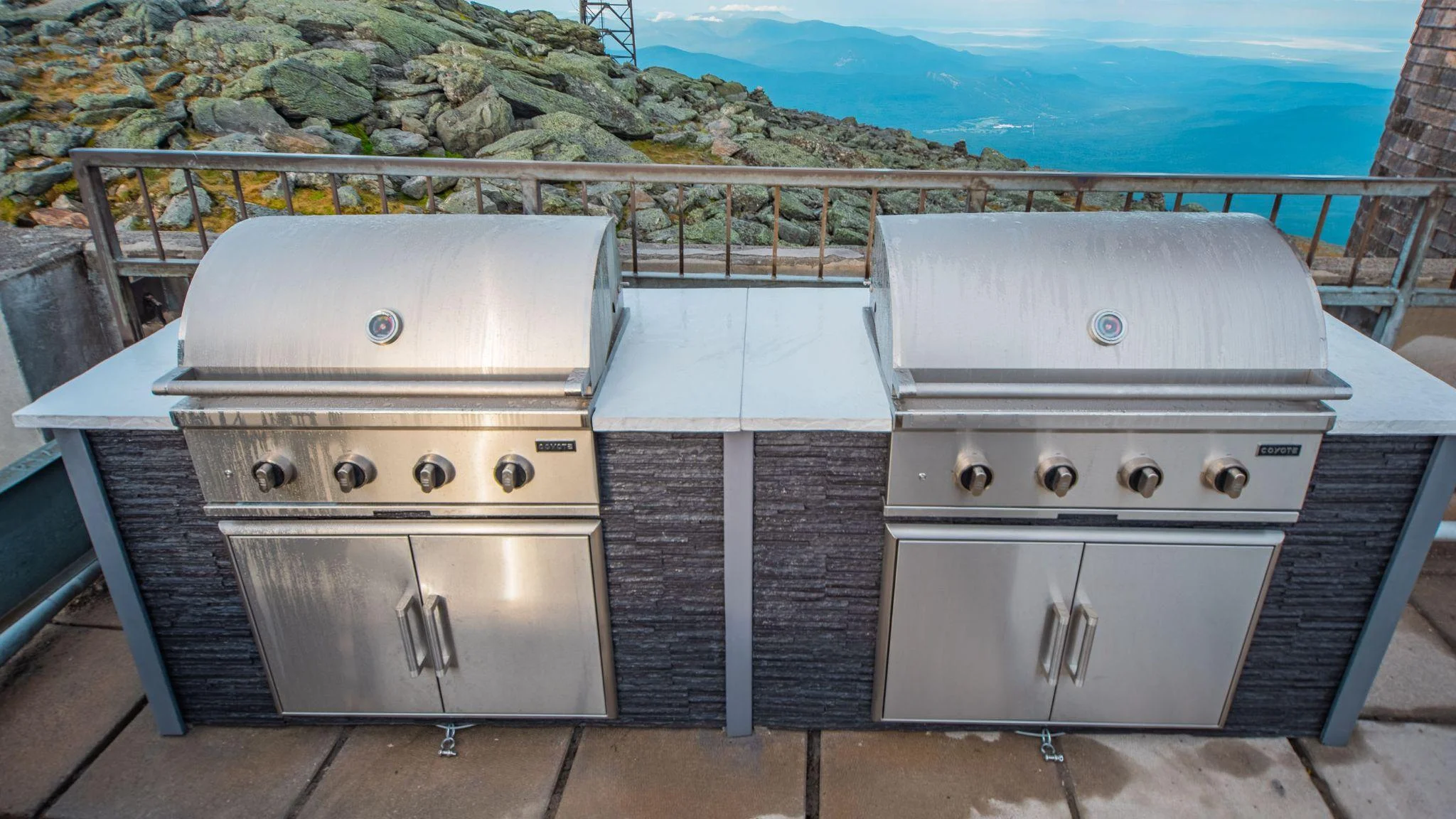
Now that you have an understanding of both compressive and flexural strength, and why that is important for your outdoor kitchen… of course, you’ll want to know:
“What outdoor kitchen solution provides the best compressive and flexural strength?”
The reality is, these two qualities generally act in opposition to one another. A material with great compressive strength usually has lower flexural strength… and vice versa. So to answer this question fully, there are two different ideal materials in each category.
If you want an outdoor kitchen with the best compressive strength, choose high performance concrete. This material is exceptionally dense, durable in all climates, and has incredible compressive strength.
If you want an outdoor kitchen with the best flexural strength, choose marine grade HDPE. This material has great flexural strength without sacrificing durability and weather resistance. There’s a reason why this material is ubiquitous in the harsh marine environment! If there’s a chance you may relocate your outdoor kitchen in the future, this will be the better material choice.
For yet more context on the difference between high performance concrete and marine grade HDPE outdoor kitchens… check out this comparison article about these two different material types. Enjoy the read, and if you have any questions, feel free to reach out!