




If you plan to install an outdoor kitchen underneath a pavilion or pergola… you have quite a few additional planning considerations to keep in mind. One essential topic in particular is related to safety.
When you are installing an outdoor kitchen under a covered structure, do you need a vent hood?
As an outdoor kitchen manufacturer that has guided countless homeowners through this very situation, we have a strong understanding of when a vent hood is (and is not) required. In this article, you will learn if outdoor kitchens under a pavilion or pergola need a hood, considerations for installing an outdoor kitchen under a covered structure, and if there’s anything else you should know about hood ventilation.
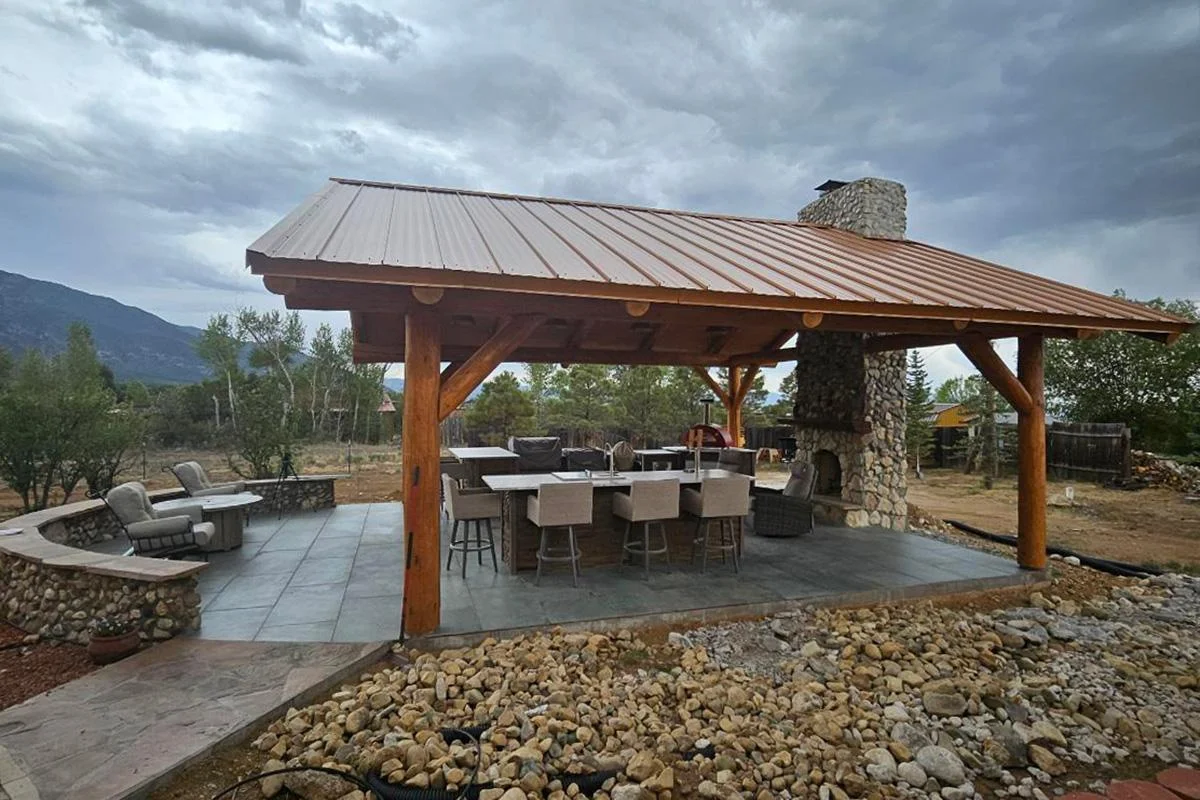
Do Outdoor Kitchens Under a Pavilion or Pergola Need a Hood?
In short, yes. Nearly all outdoor kitchens installed under a pavilion or pergola require hood ventilation. Outdoor cooking appliances release an immense amount of heat, and sometimes aerosolized grease, which can become a significant fire risk. Overhead ventilation will remove heat and grease droplets from the area, preventing dangerous buildup and overheated structures.
Considerations for Putting an Outdoor Kitchen Under a Pavilion or Pergola
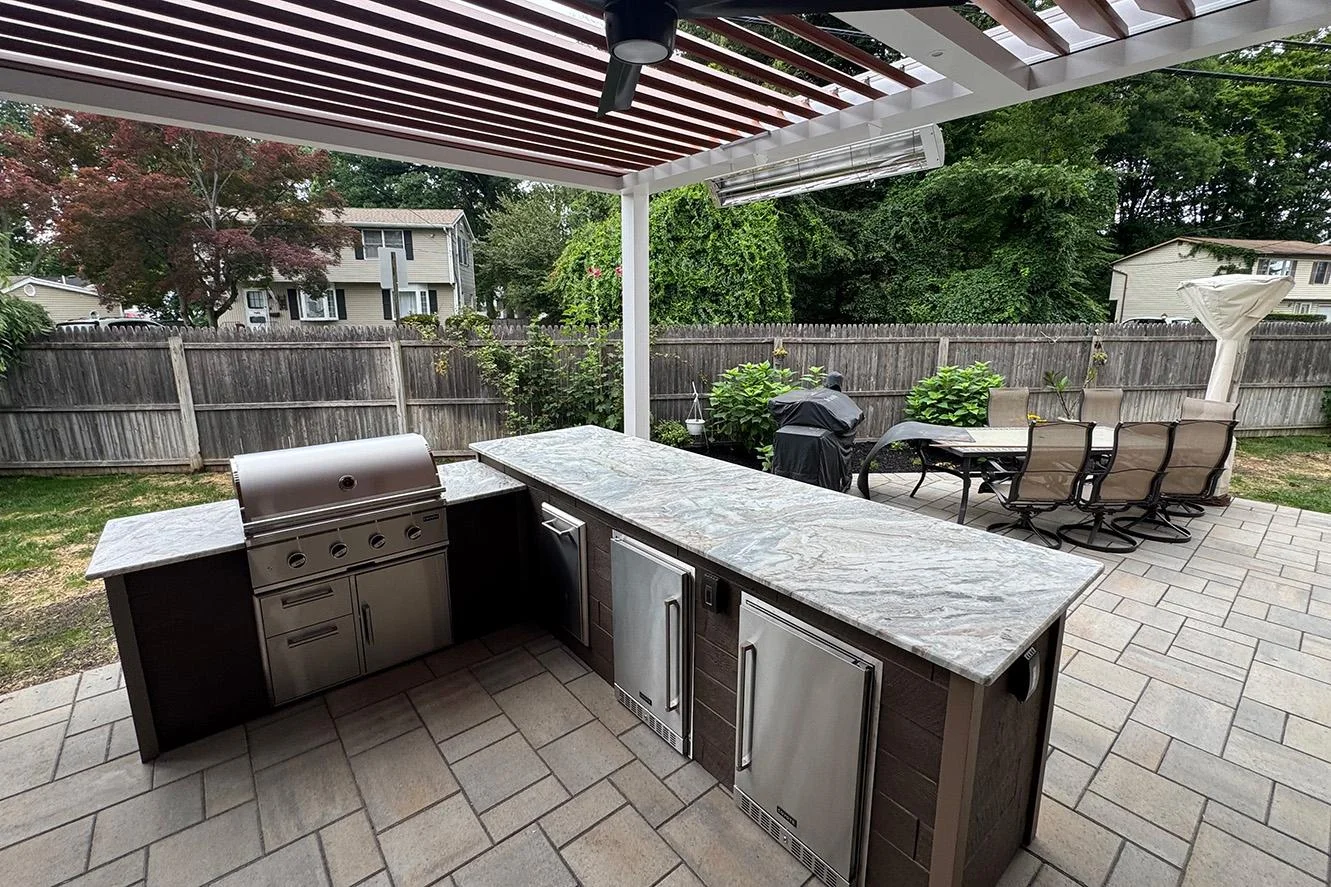
As you decide how to approach hood ventilation for an outdoor kitchen installed under a pavilion or pergola… there are several considerations to keep top of mind:
- Avoiding Ventilation Can Void Your Appliance Warranty: If you have a lot of airflow underneath and around your covered structure, you may think you can “get away” with skipping hood ventilation for your outdoor kitchen. However, more often than not, this omission can void your appliance warranty. Built-in appliance manufacturers recognize the importance of adequate ventilation for their appliances, and generally will not accept unventilated structures.
- Remember Appliance Setback Requirements: In addition to requiring hood ventilation, all built-in appliance manufacturers will have setback requirements. This describes the minimum distance their appliances need to be from combustible structures, like a wooden pavilion or pergola. You can expect distance requirements anywhere from 15”-24”+, depending on the brand and specific appliance in question. Therefore, it is essential to ensure your outdoor kitchen is situated in such a way that the appliances are in compliance with setback requirements.
- Consider Non-Combustible Materials for Your Pavilion or Pergola: Nearly all pavilions and pergolas are constructed from either wood or metal. Wood will give you a nice natural, rustic look… but even if that’s the aesthetic you’re going for, it may be worth opting for metal instead. Since wood is a combustible material, even with hood ventilation, it’s the safest choice to use metal when installing an outdoor kitchen underneath.
What Else Should I Know about Hood Ventilation for an Outdoor Kitchen?
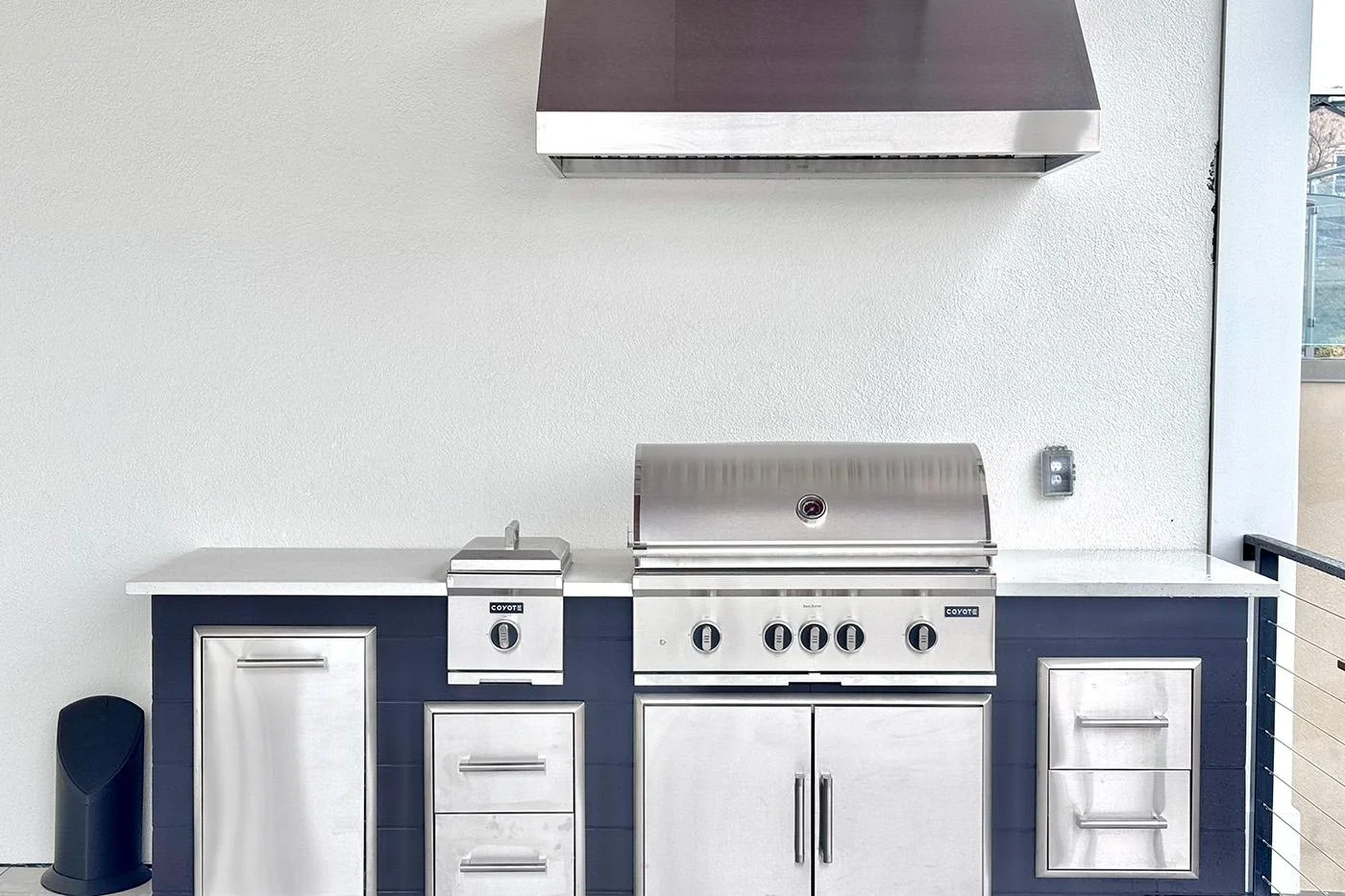
Now that you know hood ventilation is generally required for installing an outdoor kitchen under a covered structure, and considerations you should keep in mind… is there anything else you need to know about hood ventilation?
Indeed, there is! Beyond just knowing whether or not a hood vent is required… you’ll also have to decide on the type of hood vent, CFM rating, proper sizing, and materials. This article about outdoor kitchen hood ventilation will go into great detail about each of these topics, and much more.
Enjoy the read, and if you have further questions… feel free to reach out! We are always here to assist you with bringing your dream outdoor kitchen to life.

