


If you live close to the shore and you want to add an outdoor kitchen with stainless steel appliances to your backyard… you’ll almost certainly be concerned about how your desired appliances will hold up with all that salty, oceanside air battering down on them.
Which brings you to this question: “Do stainless steel appliances hold up in coastal areas?”
In your research thus far, you’ve probably encountered a wide range of conflicting and confusing information. In fact, you may now have even more questions than answers.
As a manufacturer of outdoor kitchens that partners closely with a stainless steel outdoor appliance manufacturer… helping customers deal with maintaining stainless steel appliances in coastal areas is just another part of the day-to-day for us. Over the years, we’ve learned what works (and what doesn’t work), so we can point you in the right direction.
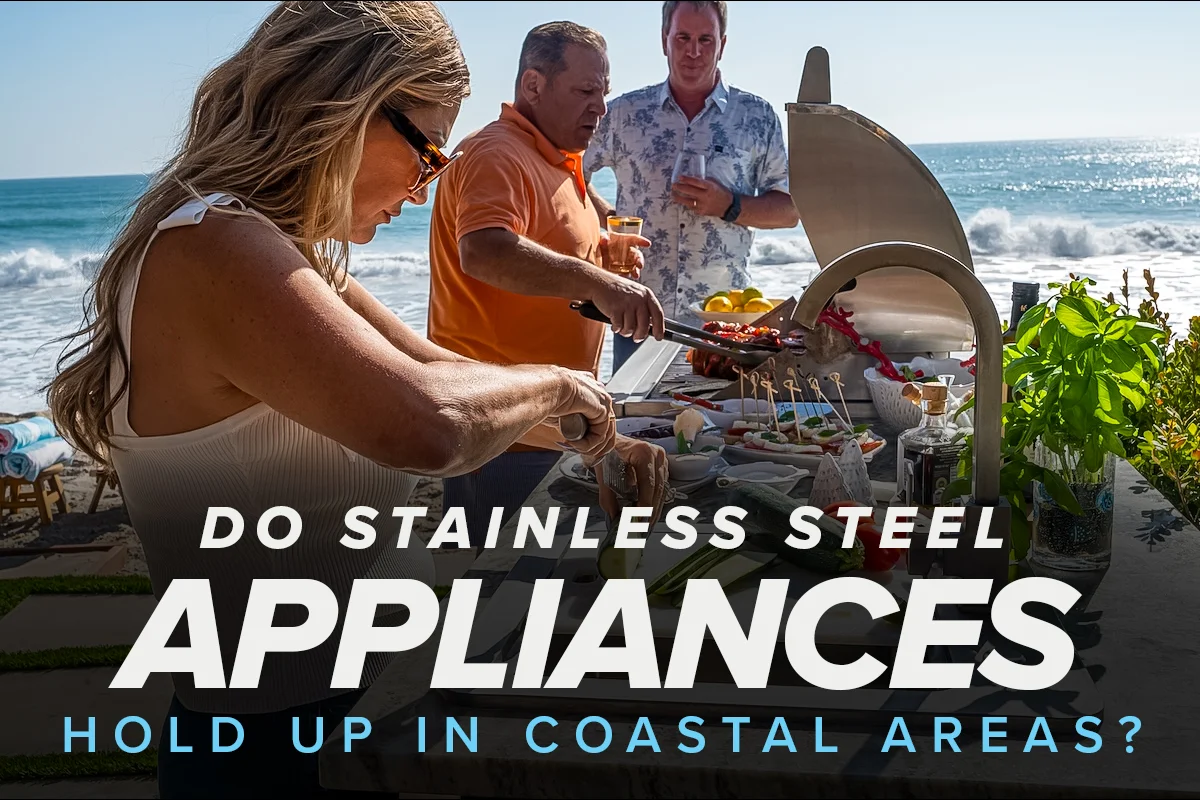
In this article, you will learn how different grades of steel used in outdoor appliances perform in a coastal environment, what steel grades are best for a coastal environment, and how to protect your stainless steel appliances from getting damaged.
Do Stainless Steel Appliances Hold Up in Coastal Areas?
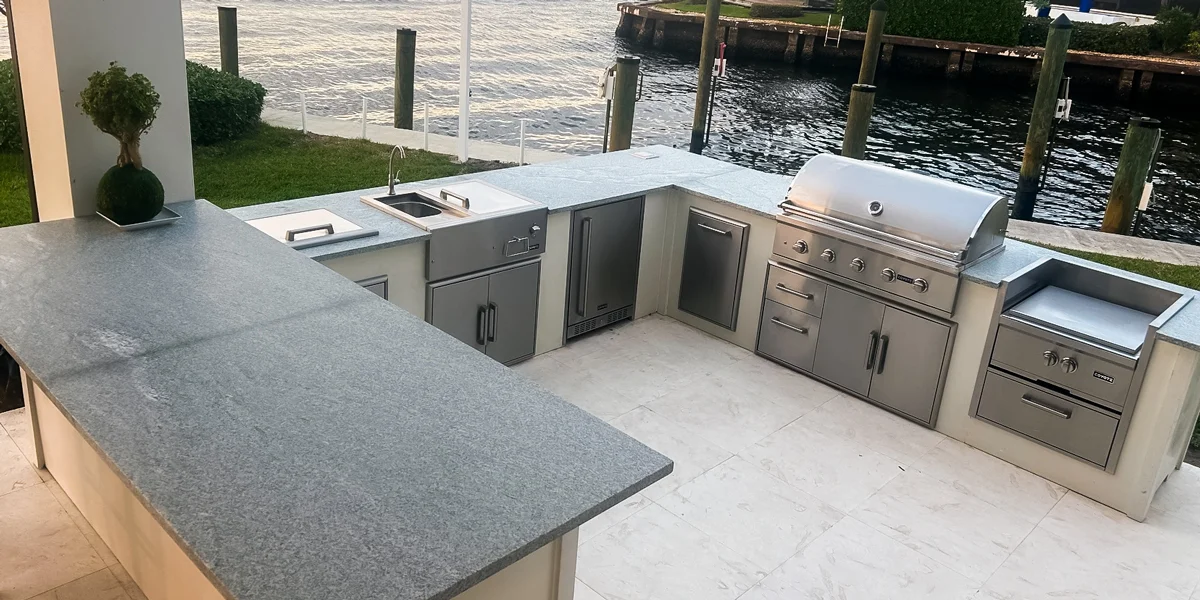
Short answer? Yes. However… There are many complicating factors at play. Appliance durability on the coastline depends on the grade of steel used, the quality of the finish, and how well your appliance is maintained. Coastal environments combine salt spray, humidity, and rapid temperature swings, which accelerate corrosion. So making an educated decision on your appliances is crucial!
How do Different Steel Grades Perform in a Coastal Environment?

Generally speaking, 430 stainless steel performs poorly in coastal environments, even with good maintenance.
Qualities of 430 Stainless Steel:- Higher in iron, lower in nickel
- Affordable
- Magnetic
- Less corrosion-resistant than other steel, especially on the coast
Due to the lack of corrosion-resistant nickel, 430 stainless steel will get surface rust (also known as tea staining) faster than other grades of steel. It’s also susceptible to corrosion on the edges, fasteners, seams, and welds. If you’re on the coast, 430 is a budget choice with a higher maintenance burden and shorter “like-new” lifespan.
304 Stainless Steel:
Does it Hold Up?

304 stainless steel appliances have great performance in coastal environments, but require proper maintenance to stay in mint condition.
Qualities of 304 Stainless Steel:- Contains 8-10% nickel, vastly improving resistance to oxidation and rust
- Performs well in humid environments, temperature swings, and nearly all outdoor conditions
- Mid-range price point
- Suitable for coastal environments when properly maintained and protected
Although 304 stainless steel is much more durable in a coastal environment than 430 stainless steel… it does need regular attention! If your appliances are frequently wet and not dried off, salt residue is allowed to sit, cleaners with chlorides are used, and/or the surface is scratched… you may see tea staining and pitting over time. With proper care (we’ll explain maintenance shortly!), you can expect strong longevity out of 304 stainless steel appliances on the coast.
316 Stainless Steel:
Does it Hold Up?

Yes, 316 stainless steel performs exceptionally well in coastal environments.
Qualities of 316 Stainless Steel:- Similar in makeup to 304, but also includes molybdenum, which significantly improves resistance to chlorides (aka salt)
- More resistant to surface rust and pitting
- High-end price point
- Ideal for coastal environments
While 316 stainless steel is the gold standard for coastal environments, it’s still not invincible. If these appliances are not properly maintained, they will eventually develop surface rust… it will just be more mild and take much longer for this to occur.
What Stainless Steel Appliances are Best for Coastal Areas?
Best in Class: 316 Stainless Steel

316 stainless steel has the best durability and longevity in coastal environments.
Choose 316 stainless steel appliances for your outdoor kitchen if:
- You live within a few miles of the ocean (or get salty mist)
- The appliance is outdoors, on a lanai, or in a breezy, covered-yet-open space
- You have extra room in your budget (316 stainless is expensive)
- You want the best odds of avoiding pitting and spotting in the long-term
Runner-Up: 304 Stainless Steel

316 might be the winner, but it’s not your only viable option for a coastal environment. 304 will also hold up perfectly well with proper care!
Choose 304 stainless steel appliances for your outdoor kitchen if:
- You’re in a coastal region but not directly exposed
- The area is fully covered and can stay dry
- You want a durable option that won’t break your budget
- You’re willing to do routine cleaning to prevent salt buildup
How to Protect Your Stainless Steel Appliances from Coastal-Related Damage

As you’ve seen, the grade of steel in your outdoor kitchen appliances matters a great deal for coastal durability. But as you’ve also seen… care and maintenance are just as important. So, how can you protect your stainless steel appliances from coastal-related damage?
- Rinse or wipe down your appliance with fresh water regularly, especially after windy days
- Dry the surface and don’t allow saltwater to evaporate on the steel
- Use a stainless steel safe cleaner, and avoid bleach or chloride based cleaners
- When cleaning brushed stainless steel, follow the grain
- If the appliance is exposed to open air, apply a protective stainless steel polish or coating for added protection
Now that you have a solid understanding of what stainless steel appliances hold up in coastal areas, what grade is best, and how to maintain them… perhaps it’s time for a deeper dive on stainless steel outdoor appliances.
This article about stainless steel grills will provide you with full context on different steel grades, why it’s important (beyond just coastal durability), and some of the best brands to consider.
Enjoy the read, and we’ll catch you in the next one!

